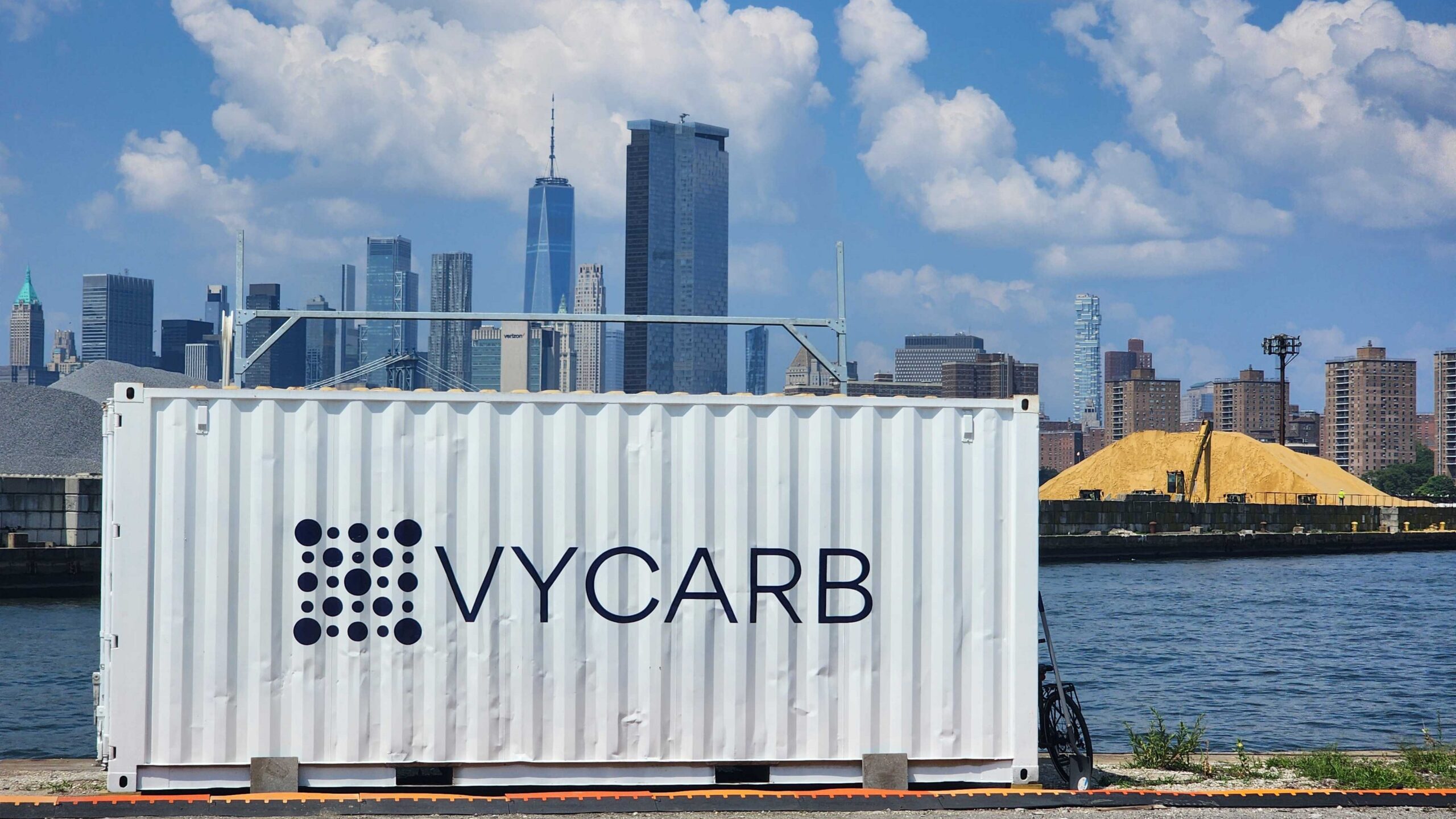
Vycarb, a Brooklyn-based startup, demonstrated a working process for storing carbon dioxide directly in seawater, potentially lowering the cost of carbon capture and storage technology. The company operates from the Brooklyn Navy Yard and has achieved what it describes as a milestone in handling low-purity CO2, a form of carbon that conventional CCS systems struggle to process economically.
The technology targets a genuine bottleneck in decarbonization. Today's carbon capture systems typically require high-purity CO2 streams extracted from point sources like industrial facilities or direct air capture machines. Separating and purifying CO2 adds substantial cost. Vycarb's approach bypasses this expensive purification step by injecting lower-grade CO2 directly into seawater, where chemical reactions convert it into stable bicarbonate compounds. Those compounds remain dissolved in the ocean, theoretically sequestering the carbon for centuries.
CEO and Founder Dr. Garrett Boudinot built the company on the premise that accessibility matters as much as performance. Traditional CCS operators reject CO2 streams below 90-95 percent purity due to contaminants that corrode equipment and reduce storage efficiency. Industrial sources often produce mixtures containing nitrogen, oxygen, water vapor, and other gases that make purification expensive. Facilities like steel mills, cement plants, and power stations generate these impure streams constantly. Making them usable expands the potential addressable market for CCS deployment.
The seawater storage mechanism itself has existed in scientific literature for years. Dissolved CO2 forms carbonic acid, which reacts with dissolved minerals in seawater to create bicarbonate. The ocean naturally buffers enormous quantities of CO2 through this process. Vycarb's innovation appears to center on engineering a practical, deployable system that handles variable CO2 purity levels without extensive preprocessing.
Cost economics matter for climate policy. CCS currently operates at approximately $100 to $600 per ton depending on capture method, location, and purity requirements. At those prices, the technology remains confined to well-funded demonstration projects and government-subsidized facilities. Lowering operational costs through simplified input requirements could accelerate deployment across heavy industry, where CCS represents one of the few viable decarbonization pathways for sectors like cement production and steel manufacturing.
Potential regulatory hurdles remain unaddressed in current reporting. Ocean alkalinity enhancement and in-situ carbonation carry uncertainties regarding long-term environmental effects, local pH changes, and ecosystem interactions. The International Maritime Organization and various coastal governments have begun drafting rules around ocean-based CO2 storage. Whether regulators will classify Vycarb's seawater approach as safe marine disposal or require additional permitting remains unclear.
The company's location at Brooklyn Navy Yard positions it for scaling near coastal industrial hubs in the Northeast, where steel production, power generation, and petrochemicals cluster. Accessibility to both contaminated CO2 sources and deep ocean water creates operational advantages compared to inland carbon capture facilities.
Vycarb has not announced commercial deployment dates, customer commitments, or financing rounds recently. The milestone announcement suggests progress beyond bench-scale testing, though independent verification of storage permanence and efficiency remains pending. If the company achieves commercial viability at substantially lower cost than conventional CCS, adoption could accelerate across industries currently resistant to carbon reduction measures due to expense.