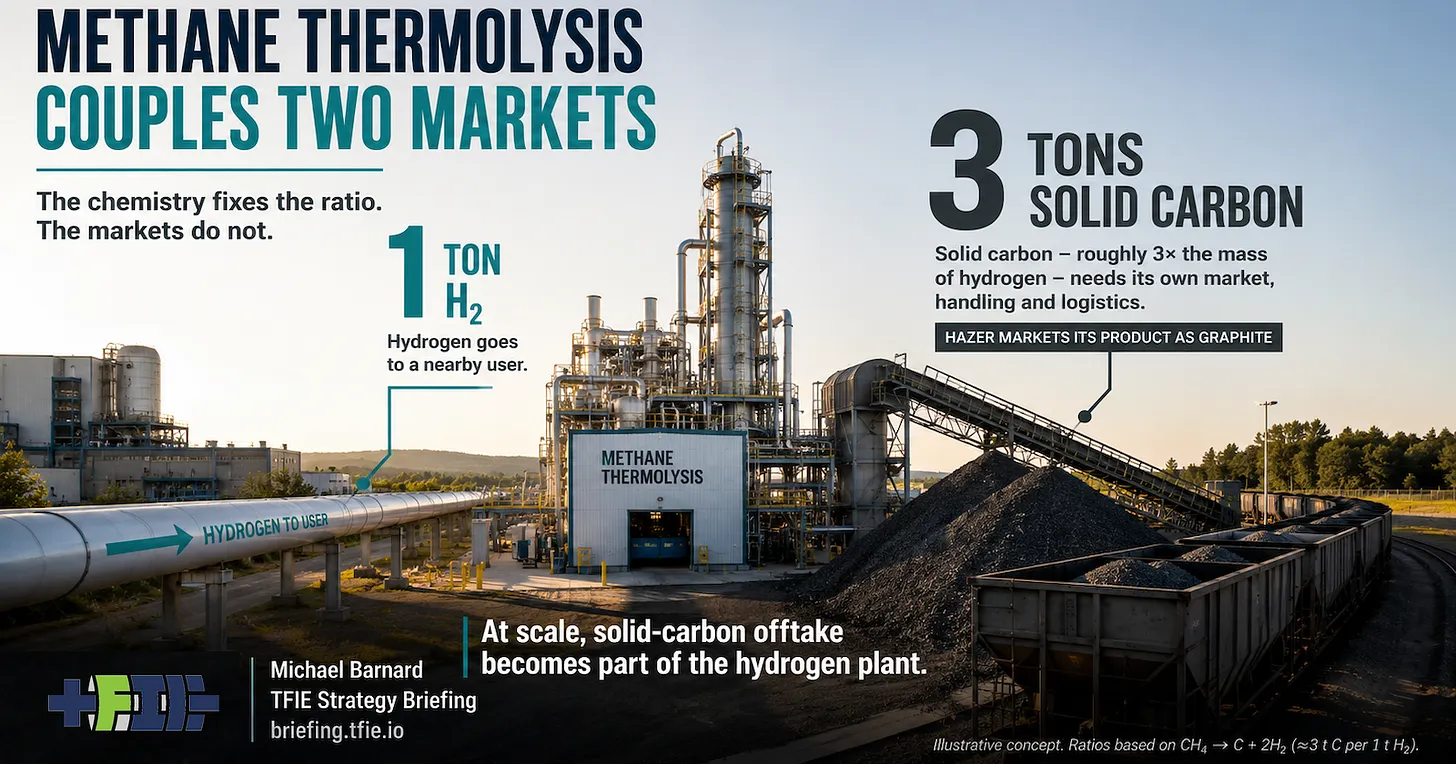
Methane thermolysis, a hydrogen production method that breaks down natural gas using heat rather than combustion, faces a structural problem in existing carbon markets that threatens its economic viability despite its environmental appeal.
The process heats methane to high temperatures, splitting it into hydrogen and solid carbon. Unlike traditional steam methane reforming, which releases carbon dioxide as a byproduct, thermolysis produces carbon as a solid that can theoretically be sequestered, stored, or repurposed. This distinguishes it from other hydrogen pathways and positions it as potentially one of the cleanest options for producing hydrogen without direct carbon emissions.
But carbon markets, the regulatory and financial mechanisms designed to incentivize emissions reductions, treat thermolysis unevenly. The solid carbon produced during the process sits in regulatory and accounting limbo. Existing carbon markets in regions like the European Union and under emerging standards like the hydrogen production methodology under various carbon accounting frameworks struggle to assign clear value to carbon that emerges in solid form rather than as captured CO2.
The distinction matters financially. In carbon markets, companies earn credits or allowances based on emissions avoided or reduced. A producer using thermolysis produces no CO2 emissions from hydrogen generation itself, yet the solid carbon output lacks standardized market mechanisms to monetize that avoided emissions or justify a price premium for the hydrogen product. Compare this to carbon capture and storage (CCS) paired with reforming, where captured CO2 enters established trading systems with defined prices and accounting rules.
Engineers and entrepreneurs developing thermolysis technology report that without clear carbon market valuation for the solid byproduct, hydrogen from thermolysis cannot compete on cost with either conventional reforming or electrolysis powered by subsidized renewable electricity. The technology requires substantial capital investment and operates most efficiently at scale. Investors and manufacturers need revenue streams from carbon credits to justify those costs.
The problem intensifies because regulators have not yet classified solid carbon from thermolysis consistently across jurisdictions. Some frameworks treat it as sequestered carbon eligible for credits. Others do not recognize it at the point of production. Still others require verification that the carbon will remain sequestered permanently, a requirement thermolysis producers struggle to guarantee when the solid product may be resold or reused.
This creates a market failure. Thermolysis produces hydrogen with a lower lifecycle carbon footprint than conventional hydrogen, yet the carbon market architecture does not reward this outcome. Companies invest in cleaner technology only to face economic penalties from ambiguous accounting.
Resolution requires either regulatory clarity on solid carbon accounting or policy changes that value thermolysis hydrogen directly through production credits independent of carbon market mechanisms. The European Commission and emerging hydrogen standards bodies have begun examining this gap. Without addressing it soon, thermolysis technology risks stalling despite its technical promise, leaving conventional reforming and electrolysis to dominate hydrogen supply chains even where thermolysis could deliver faster emissions reductions at lower cost.
The broader lesson applies across emerging hydrogen pathways. Carbon markets designed for legacy technologies often fail to accommodate innovations that break the mold of traditional emissions accounting.