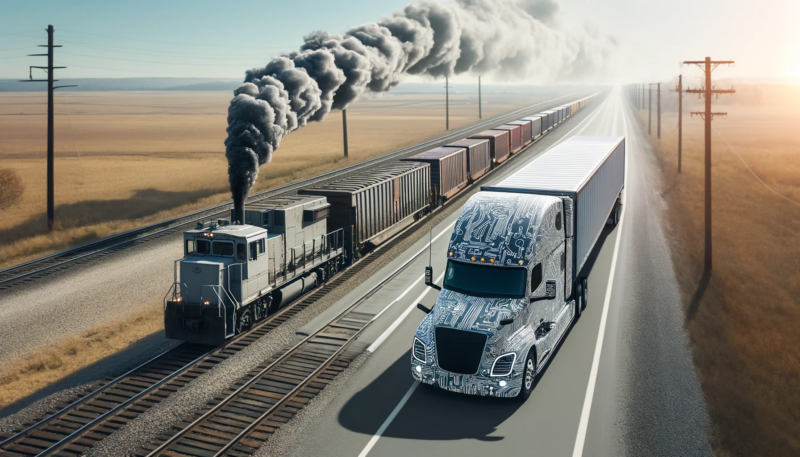
The Trump administration finalized a rule weakening Corporate Average Fuel Economy standards for heavy-duty commercial vehicles, a move that locks in higher diesel consumption at a moment when fuel prices are already climbing.
Heavy-duty trucks, buses, and other large commercial vehicles account for roughly 30 percent of transportation sector emissions while representing only 10 percent of vehicles on U.S. roads. The newly finalized CAFE standards reduce the fuel efficiency requirements that manufacturers must meet, effectively reversing Obama-era rules that required incremental improvements in truck fuel economy through 2027.
The timing compounds the impact on fleet operators. Diesel prices have risen sharply in recent months due to refinery constraints and geopolitical pressures on global oil supplies. By weakening efficiency standards now, the administration removes a critical tool that would have pushed manufacturers to invest in engine technologies, aerodynamic improvements, and lighter materials that reduce fuel consumption.
Under the previous standards, heavy-duty manufacturers faced requirements to cut fuel consumption by approximately 10 percent annually through 2027. The finalized rule replaces this with a gentler trajectory. Industry groups and some manufacturers supported the change, citing regulatory burden. Environmental advocates countered that the rollback costs fleet owners billions in additional fuel expenses over vehicle lifespans.
The economics work clearly in one direction. A Class 8 tractor-trailer consumes roughly 6 gallons per 1,000 miles under current standards. Improving that to 5.4 gallons per 1,000 miles through stricter CAFE rules costs manufacturers $8,000 to $12,000 per vehicle in upfront engineering. Yet the fuel savings alone recoup that investment in two to four years, with continued savings over the typical 15-year operating life of a heavy truck.
Fleet operators, particularly independent owner-operators, will bear the cost. Diesel at $3.50 per gallon translates to roughly $2.10 in fuel cost per mile for an inefficient truck versus $1.89 for an efficient one. Over 100,000 annual miles, that difference totals $21,000 yearly in additional fuel spending per vehicle.
The National Highway Traffic Safety Administration and the Environmental Protection Agency jointly regulate these standards. The finalized rule removes targets for nitrogen oxide and particulate matter reductions that were embedded in earlier efficiency frameworks. This creates a secondary harm: trucks that burn more fuel also emit more air pollution, intensifying respiratory disease risk in communities near freight corridors and distribution hubs.
California and several northeastern states have adopted their own heavy-duty vehicle standards, setting efficiency and emissions targets stricter than the federal floor. The Trump rule does not preempt state authority, but manufacturers typically design fleets to meet the federal standard, meaning interstate trucking operations will not benefit from the state-level pushes toward cleaner, more efficient vehicles.
Freight electrification efforts also lose momentum. Battery electric trucks require significant efficiency gains in conventional diesel fleets to achieve competitive total cost of ownership. A weakened efficiency standard removes the economic pressure that would have made zero-emission trucks more cost-competitive. Battery suppliers and electric vehicle manufacturers flagged this risk during the rulemaking period.
The finalized standards take effect for 2027 model year vehicles. Manufacturers will incorporate the new requirements into long-term product planning, locking in engineering decisions for the next decade.