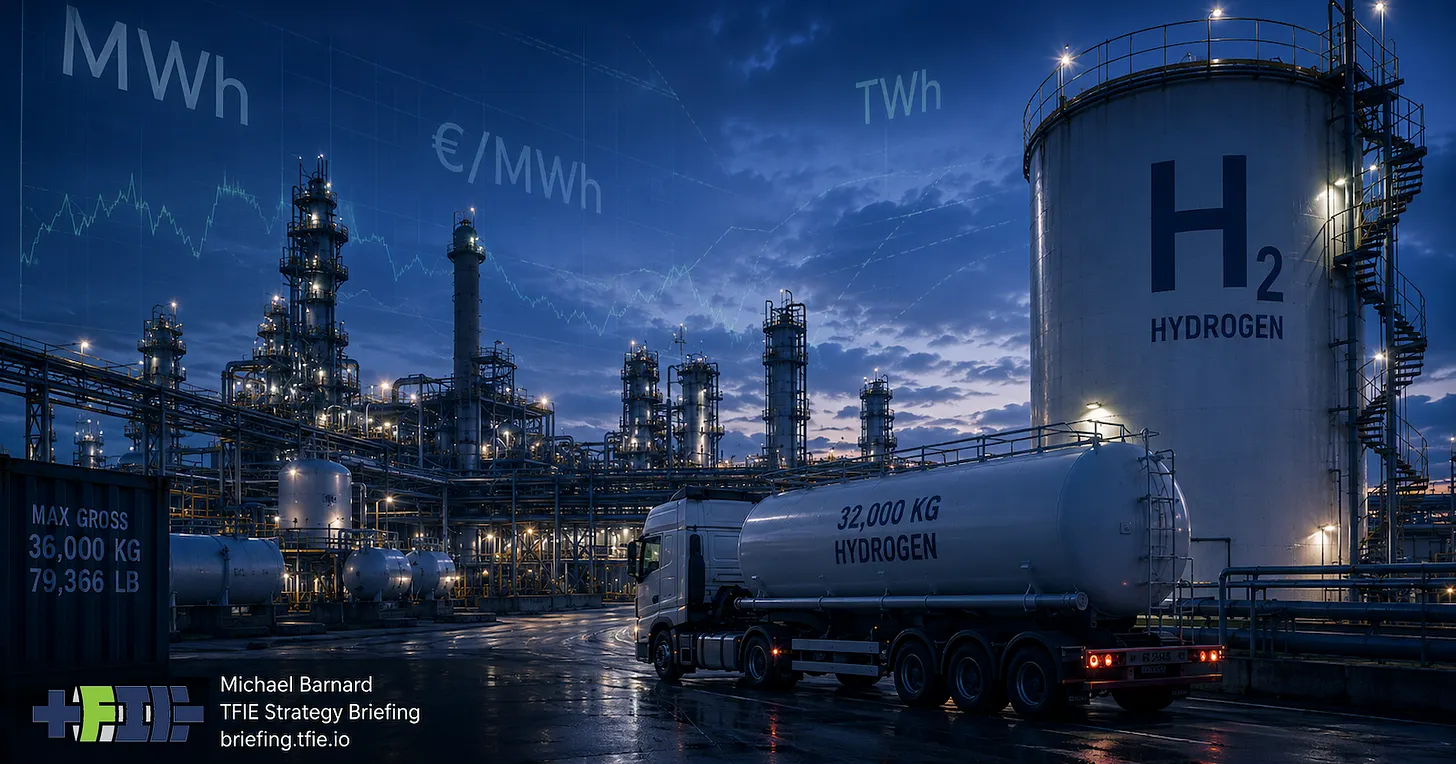
Global hydrogen demand reached 100 million tonnes in 2025, yet the industry remains locked in its traditional end uses. Nearly all hydrogen consumption occurs in oil refining and industrial chemical production, particularly ammonia synthesis. This stasis reflects a deeper market reality: hydrogen remains measured in kilograms and tonnes rather than megawatt-hours because the buyers and applications have changed little in decades.
The hydrogen market operates on fundamentally different metrics than renewable electricity markets. Power generation speaks in megawatt-hours and capacity factors. Hydrogen commerce moves in bulk tonnage contracts between refineries, fertilizer plants, and petrochemical manufacturers. These sectors depend on hydrogen as a feedstock, not fuel. Refineries use hydrogen for hydrocracking and desulfurization. Ammonia synthesis consumes roughly 50 million tonnes annually to produce fertilizers for global agriculture. These applications predate the green hydrogen transition by generations.
The 100-million-tonne figure masks a critical constraint: virtually all current hydrogen originates from steam methane reforming, a process that strips hydrogen from natural gas while releasing carbon dioxide. This production method generates roughly 10 tonnes of CO2 per tonne of hydrogen produced. The International Energy Agency estimates that hydrogen production accounts for approximately 2 percent of global CO2 emissions, roughly 830 million tonnes annually. Decarbonizing this output requires either carbon capture at reforming facilities or switching to electrolytic hydrogen powered by renewable electricity.
Green hydrogen deployment remains negligible at scale. Electrolyzer capacity worldwide generated perhaps 1 million tonnes of hydrogen in 2025, concentrated in Europe, China, and parts of the United States. This represents roughly 1 percent of total hydrogen supply. The cost gap persists despite years of policy support. Gray hydrogen from natural gas costs 1.50 to 2.50 dollars per kilogram. Green hydrogen from electrolysis costs 4 to 6 dollars per kilogram under favorable conditions with cheap renewable power. Industrial buyers lack economic rationale to switch without carbon pricing mechanisms or direct subsidies.
Policy frameworks address this gap unevenly. The European Union's Carbon Border Adjustment Mechanism imposes tariffs on carbon-intensive imports, creating incentives for low-carbon hydrogen. The United States Inflation Reduction Act offers production tax credits up to 3 dollars per kilogram for electrolytic hydrogen meeting wage and domestic content requirements. Japan and South Korea subsidize hydrogen imports and electrolyzer deployment. These policies generate investment flows but do not yet shift the commodity market at scale.
The tonnes-versus-megawatt-hours debate reflects this disconnect. Policymakers and investors often discuss hydrogen in energy terms, comparing it to other fuels in calorific equivalents or electricity conversion efficiency. This framing misses how industrial hydrogen actually trades. An ammonia manufacturer commits to supply contracts measured in kilotonnes per year, not kilowatt-hours. Equipment specifications, logistics networks, and procurement processes center on bulk chemical quantities. Changing this requires not just cheaper green hydrogen but restructured supply chains and long-term offtake agreements.
The market will shift only when green hydrogen costs approach parity with gray hydrogen across major consuming regions. Current projections place this crossover in the 2030s under optimistic scenarios. Until then, hydrogen remains what it has always been: a bulk chemical commodity serving mature industrial processes, measured in the units that market participants actually use.