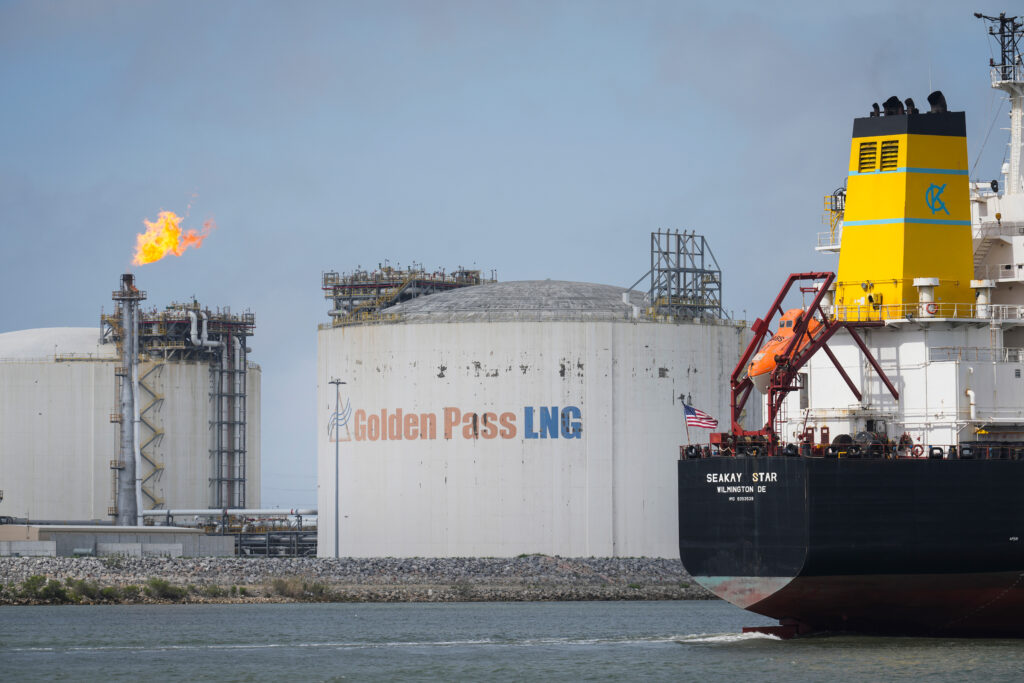
# Trump Administration Directs Billions to Natural Gas Export Infrastructure Amid Oversupply
The Trump administration has committed substantial federal resources to expand liquefied natural gas (LNG) export capacity, channeling billions into infrastructure projects even as the market shows signs of saturation. This push accelerates domestic fracking operations while positioning American gas producers for international sales.
LNG export terminals convert natural gas into liquid form for ocean transport. The administration's support encompasses permitting acceleration, loan guarantees, and direct subsidies to companies developing export facilities. These investments lower the financial barriers for private operators, enabling projects that might otherwise struggle to attract private capital.
The market dynamics reveal a critical tension. Domestic production capacity has expanded faster than global demand can absorb. Natural gas producers have proposed export facilities at unprecedented scale, but insufficient buyer commitments threaten project viability. Banks and investors increasingly question whether these terminals will operate at profitable utilization rates.
Despite this oversupply reality, the administration has continued backing new export infrastructure. The Department of Energy has issued LNG export authorizations for companies including Venture Global LNG, Commonwealth LNG, and Corpus Christi Pipeline Company. Federal loan programs through the Department of Agriculture and other agencies provide below-market financing to accelerate construction timelines.
This strategy directly incentivizes increased domestic extraction. Higher export demand justifies expanded drilling operations across the Permian Basin, Marcellus Shale, and other prolific shale regions. Each fracking well generates methane emissions during extraction, transmission, and processing. The U.S. Environmental Protection Agency estimates that oil and gas operations account for approximately 30 percent of anthropogenic methane emissions nationally.
Environmental groups dispute the long-term economic rationale for these investments. Kate Konwinski, director of the Global Energy Monitor, notes that overcapacity risks leaving terminals underutilized while locking in decades of extraction commitments. The climate analysis becomes stark: each new export facility designed for 30-year operation locks in sustained greenhouse gas emissions across the supply chain.
International demand remains uncertain. European Union energy independence goals shifted focus toward renewable deployment rather than LNG diversification. Asian markets show tempered growth in natural gas appetite. Japan has accelerated nuclear plant restarts following Fukushima, reducing LNG imports substantially. Yet U.S. export permits continue expanding without corresponding sales contracts.
The financial risk appears concentrated among government entities and project developers, not equity investors. When private capital retreats from an industry, federal backing typically indicates policy priorities rather than market confidence. The administration's LNG push reflects a strategy to consolidate American energy dominance and export revenues, regardless of demand fundamentals.
This approach contests the International Energy Agency's 2023 analysis, which concluded that global LNG capacity already exceeds mid-century demand scenarios under all climate pathways examined. IEA models consistent with Paris Agreement temperature targets show LNG as a transitional fuel requiring strict demand growth controls.
The permitting acceleration through federal agencies has bypassed some state-level environmental reviews. Pipeline construction corridors increasingly cross sensitive ecosystems, raising concerns about habitat fragmentation and water contamination risks in agricultural regions.