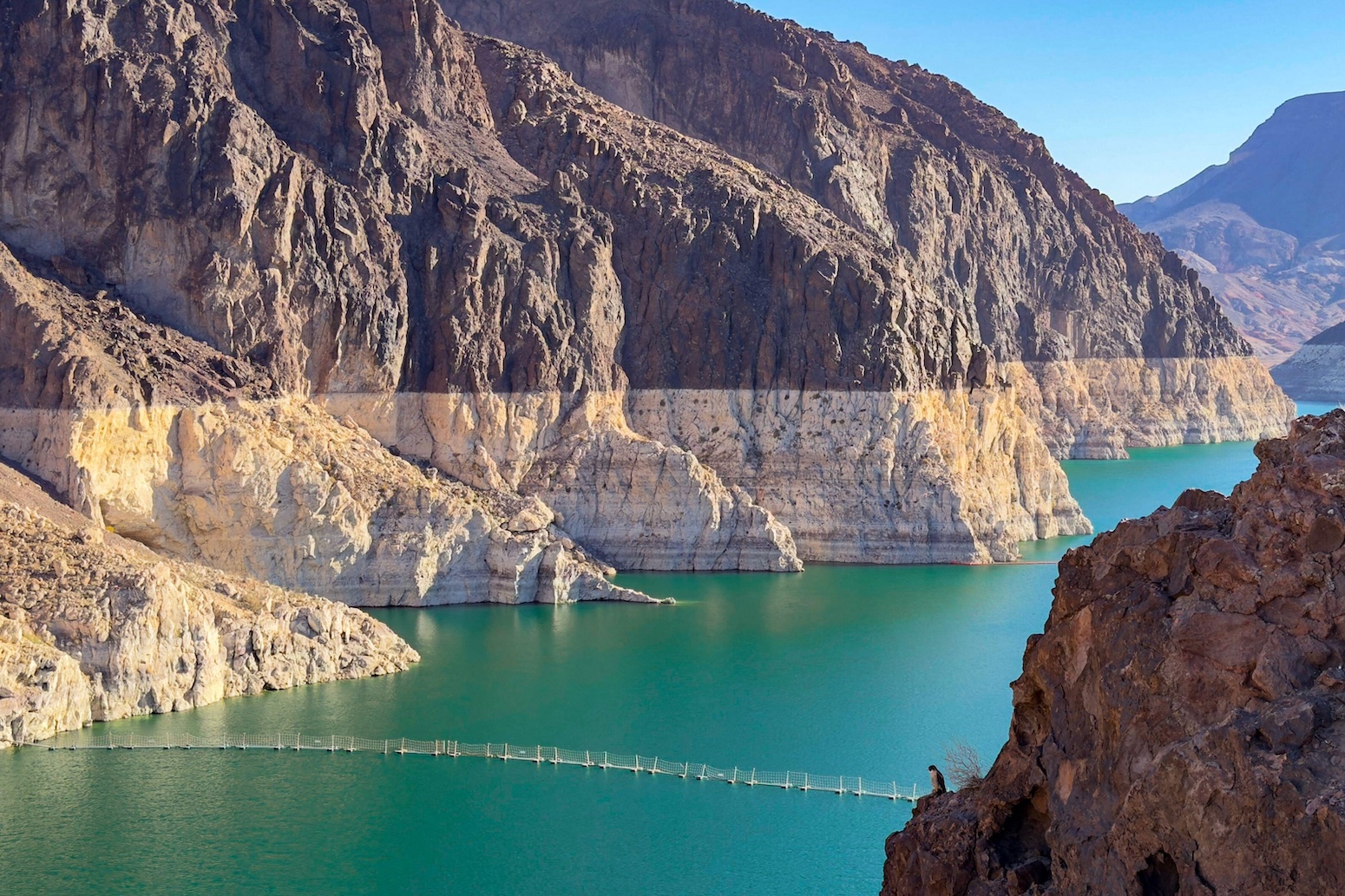
Lake Mead and Lake Powell, the two largest reservoirs in the United States, both hit historic low water levels this week. Lake Powell reached record-low elevation on Saturday, just days after Lake Mead dropped to its lowest point since the reservoirs filled decades ago.
These twin collapses reflect the accelerating water crisis gripping the Colorado River Basin, which supplies drinking water and irrigation to 40 million people across seven states. The reservoirs' decline stems from a two-decade megadrought driven by climate change and sustained overallocation of the river's 16.5 million acre-feet annual flow.
Lake Mead sits at the lowest level since 1937, when Hoover Dam first began impounding water. Lake Powell, created by Glen Canyon Dam, similarly approaches levels not seen since initial filling in the 1960s. Both facilities generate hydroelectric power critical to the Southwest's electricity grid. As water drops, power generation capacity shrinks, forcing utilities to purchase replacement power at higher costs.
The cascade of consequences ripples outward. Exposed lakebed reveals ghost towns and contaminated sediments. Water intake pipes at both reservoirs now sit dangerously close to elevation thresholds below which they cannot function. If levels fall further, water delivery to Arizona, Nevada, and California faces mandatory cuts.
Climate models project the Colorado River Basin will lose another 10 to 30 percent of its water supply by mid-century due to warming temperatures. Higher heat increases evaporation from both reservoirs and reduces snowpack that naturally stores water in mountain regions.
Western states have begun rationing. Arizona reduced its Colorado River allocation by 21 percent in 2022. Nevada accepted cuts of 8 percent. California faces reductions in 2024. These cuts strain agricultural production in the nation's vegetable basket and threaten municipal water supplies for Phoenix, Las