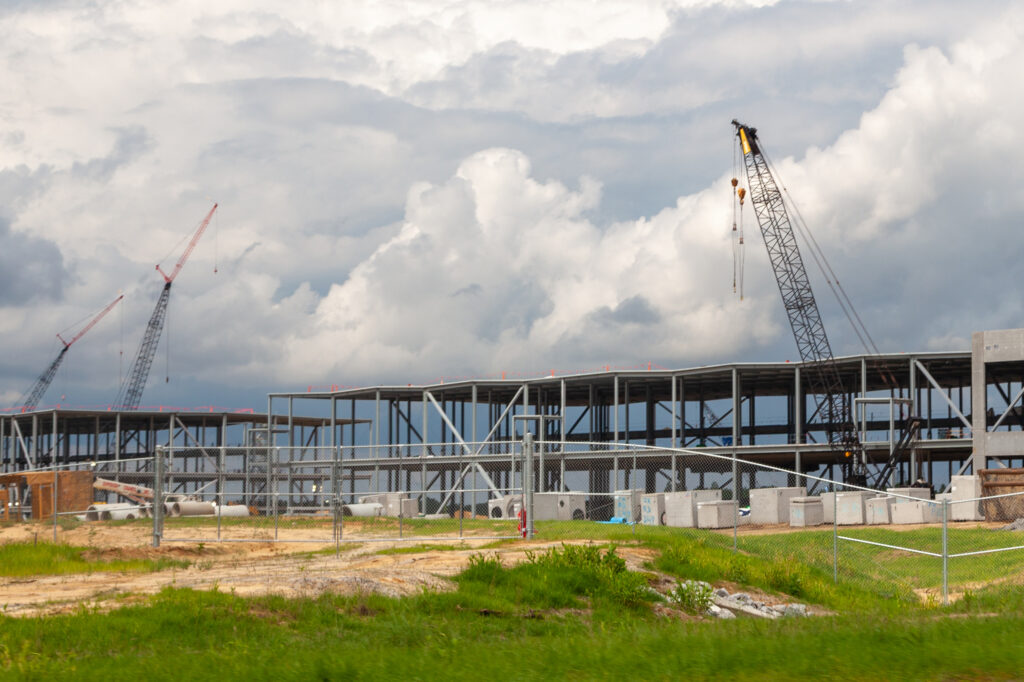
Amazon's $10 billion data center project in rural North Carolina proceeded through secretive negotiations that excluded public input, according to reporting from Inside Climate News. The facility under construction in Hamlet, Richmond County, will be one of the largest economic development projects in state history. County officials negotiated substantial tax breaks for Amazon without transparent community consultation, then announced the deal as a fait accompli.
The project faces fierce resident opposition despite promises of economic growth. The secretive process raises governance questions about how major infrastructure decisions get made in rural areas, where local governments often lack resources to negotiate with large corporations on equal terms.
Data centers consume enormous quantities of electricity and water. Amazon's North Carolina facility will draw power from regional grids, intensifying demand during a period when utilities are racing to meet net-zero commitments. The water demands of cooling systems can strain local aquifers and surface water supplies, a concern in agricultural communities dependent on groundwater.
The tax incentives granted to Amazon reduce public revenue available for schools, infrastructure, and services in Richmond County, a rural area already facing economic constraints. Such arrangements have become standard across states competing for data center investment, but they transfer costs to communities while concentrating corporate profits.
Data centers represent a growing source of carbon emissions as computing demand expands globally. The electricity consumed by these facilities contributed roughly 1 percent of global emissions in 2023, according to the International Energy Agency. That figure is expected to rise significantly by 2030 if renewable energy sources do not scale faster than data center expansion.
The North Carolina deal exemplifies a pattern where rural communities absorb environmental and fiscal costs while bearing minimal decision-making power. Lack of transparency in negotiations prevents residents from evaluating tradeoffs between short-term job creation and long-term environmental liabilities. The secretive process also limits opportunities for residents to demand stronger environmental protections or infrastructure investments as conditions for approval.