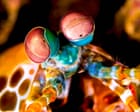
Invertebrates represent over 97 percent of all animal species on Earth, yet their ecological role remains widely underestimated in public discourse. A new feature examining invertebrate biology highlights the mantis shrimp as a case study in evolutionary adaptation. The creature accelerates its raptorial strike faster than a .22 calibre bullet, generating cavitation bubbles that produce shock waves exceeding 210 decibels underwater. This hunting mechanism evolved as a response to prey detection challenges in murky coral reef environments.
The mantis shrimp example illustrates a broader pattern in invertebrate biology. These organisms occupy virtually every terrestrial and aquatic ecosystem, from deep ocean trenches to high mountain peaks. Invertebrates pollinate approximately 75 percent of global crop species and constitute the foundation of most food webs. Their loss directly threatens food security for human populations dependent on pollinator-mediated agriculture.
Recent biodiversity assessments document alarming invertebrate population declines. Studies in Germany found insect biomass fell 76 percent between 1989 and 2016. Comparable research across North America and Europe confirms similar trajectories. Habitat loss, pesticide application, and climate disruption drive these collapses.
The mantis shrimp's extraordinary sensory and motor capabilities exist within a lineage spanning over 400 million years. Yet this deep evolutionary history provides no guarantee against contemporary extinction pressures. Ocean acidification, warming waters, and coastal development threaten coral reef invertebrate communities directly.
Understanding invertebrate diversity serves practical conservation purposes. Species-specific adaptations reveal vulnerability points where targeted protection becomes possible. The mantis shrimp's dependence on healthy reef structures exemplifies how invertebrate survival connects to ecosystem integrity. Protecting these organisms requires addressing habitat destruction and reducing chemical inputs to natural systems. Invertebrate conservation remains inseparable