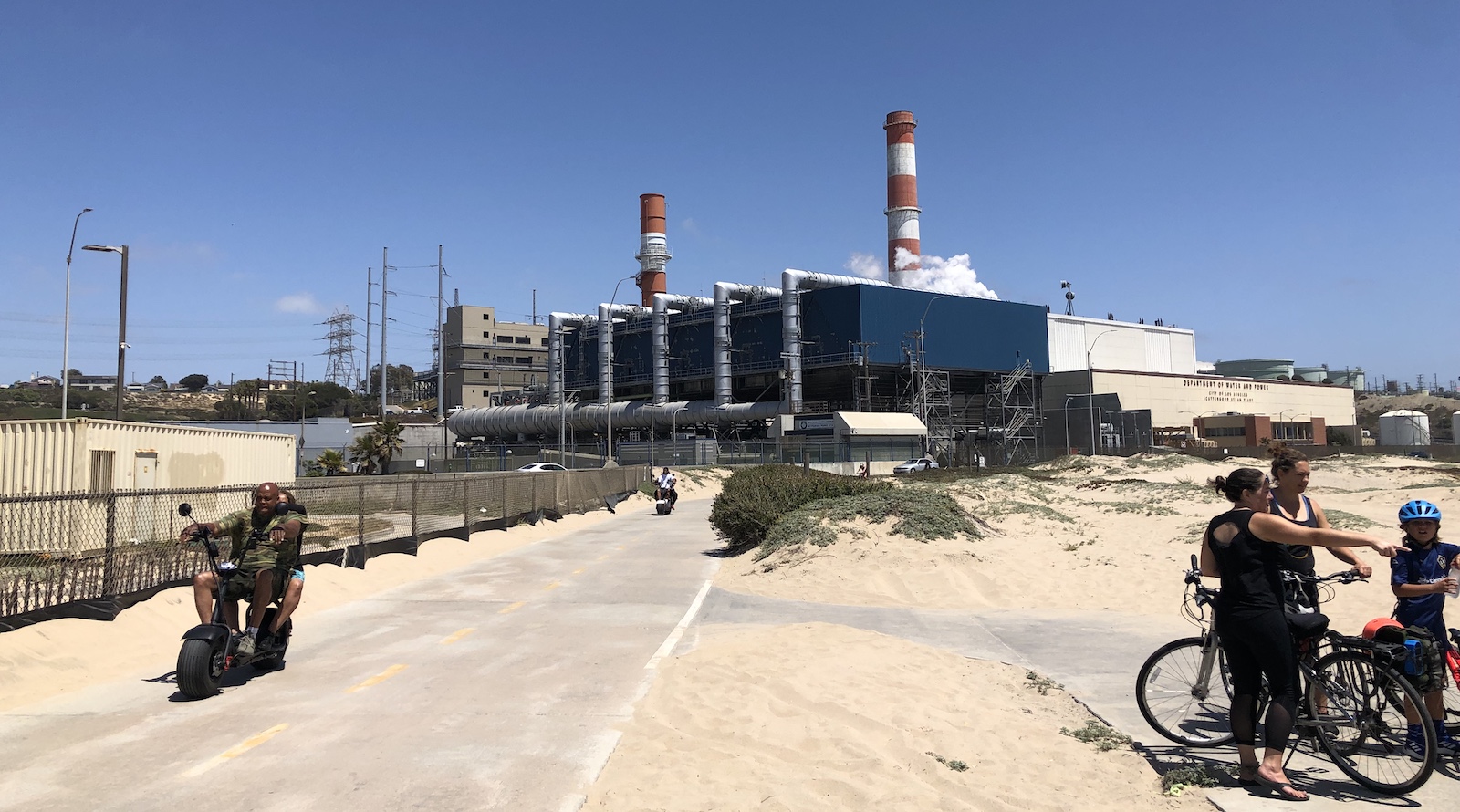
The Los Angeles City Council voted today to permit the Los Angeles Department of Water and Power to retrofit the Scattergood Generating Station, a natural gas power plant, to burn a fuel mixture that the utility argues will reduce emissions. The project carries an estimated cost exceeding one billion dollars.
Environmental advocates and community groups opposed the retrofit, contending that retrofitting aging fossil fuel infrastructure contradicts Los Angeles' climate commitments and renewable energy targets. The council's decision overrides these objections and clears the path for the LADWP to proceed with modernizing the plant's combustion systems.
The retrofit would enable Scattergood to burn a blend of natural gas and hydrogen, a technology the LADWP presents as a bridge fuel strategy during the transition away from fossil fuels. Supporters argue this approach maintains grid reliability while reducing carbon intensity compared to conventional natural gas combustion alone.
Opponents counter that the billion-dollar investment locks the region into continued reliance on gas infrastructure for decades, diverting capital that could fund faster renewable energy deployment and battery storage systems. They note that California's grid operator has increasingly relied on wind and solar resources, and that natural gas capacity additions appear inconsistent with state climate targets requiring net-zero emissions by 2045.
The Scattergood plant sits in the South Los Angeles neighborhood of Playa Vista, an area already burdened with multiple industrial facilities. Environmental justice advocates raised concerns about cumulative air quality impacts from continued gas combustion, even with retrofit technology.
Los Angeles has committed to deploying 100 percent clean electricity by 2035 under the city's Green New Deal framework. The Scattergood retrofit decision signals the LADWP's interpretation that this goal accommodates extended natural gas operations utilizing low-carbon fuel blends, a position that drew sharp criticism from clean energy organizations during the council debate.