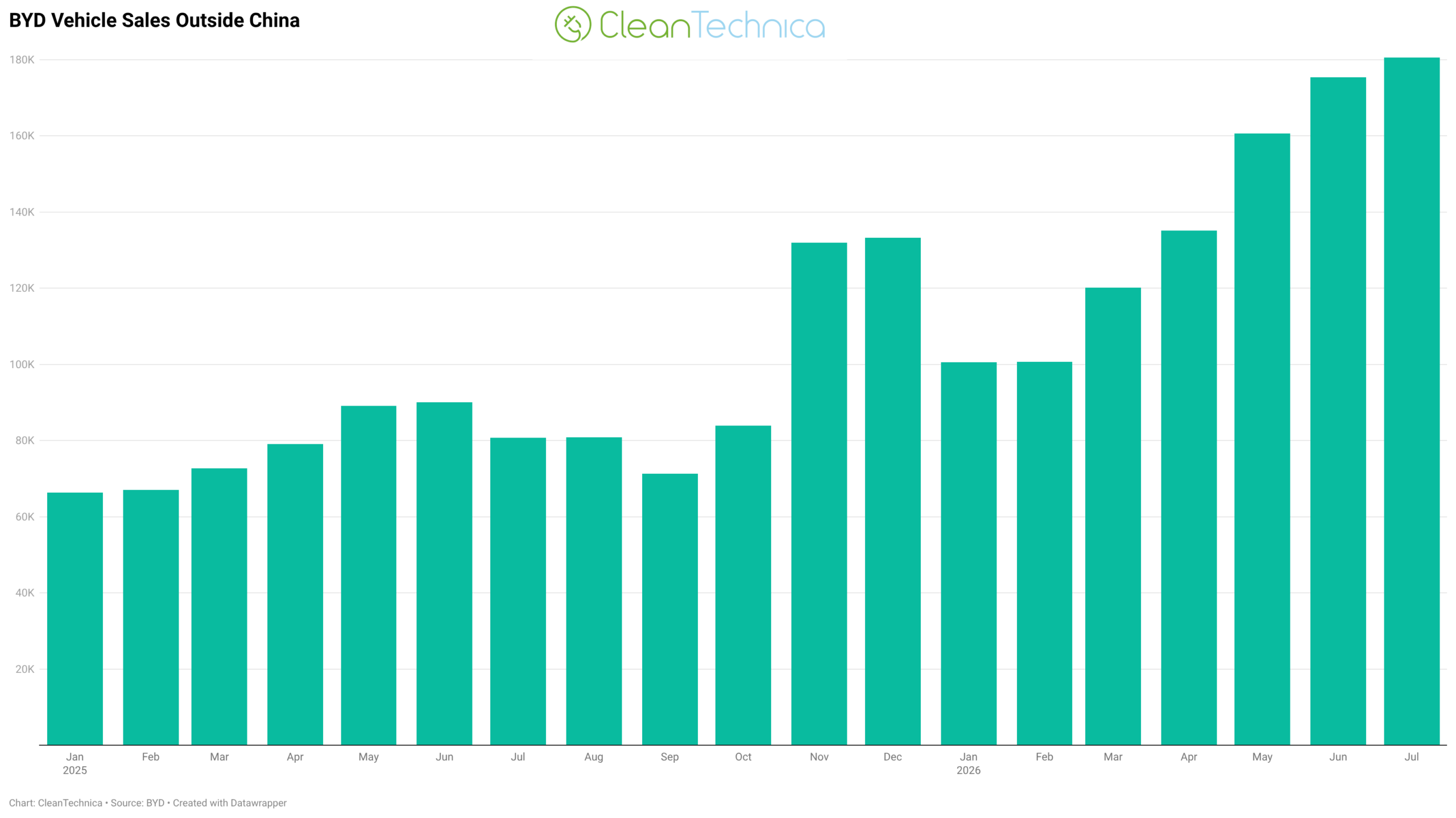
BYD reported a 124 percent surge in exports during its latest reporting period, marking a sharp acceleration in the company's global push as Chinese automakers expand their footprint beyond domestic markets. The Shenzhen-based manufacturer achieved its second-best sales month ever for battery electric vehicles, with BEV sales climbing 31 percent while overall passenger vehicle sales grew 20.5 percent.
The export milestone reflects intensifying global demand for Chinese electric vehicles, even as trade tensions simmer over tariffs and market access. BYD's expanded overseas presence comes as Western automakers scramble to compete on price and battery technology. The company commands the world's largest EV market share and has become the primary competitor to Tesla in multiple regions.
The specific breakdown between domestic Chinese sales and international exports remains partially opaque from the available data. This distinction matters because it clarifies whether BYD's growth stems primarily from saturating its home market or genuinely penetrating global markets. China's domestic EV market has matured rapidly, pushing manufacturers to seek revenue streams abroad.
BYD's export surge arrives amid broader geopolitical shifts in automotive manufacturing. The company has established production facilities across Southeast Asia, Europe, and Latin America to circumvent tariff barriers and meet local demand. Its two-pronged strategy of passenger vehicles and commercial electric buses has diversified revenue sources beyond personal transportation.
The 124 percent export growth outpaces the company's overall sales growth, suggesting BYD strategically prioritizes international expansion. This pattern aligns with China's push to establish manufacturing dominance in green technology sectors before Western competitors fully mobilize.
Observers should monitor whether BYD's export trajectory reflects genuine global acceptance or temporary advantages tied to battery cost leadership. Supply chain resilience, quality consistency, and consumer acceptance in developed markets remain open questions. BYD's performance nonetheless signals that Chinese EV manufacturers have moved