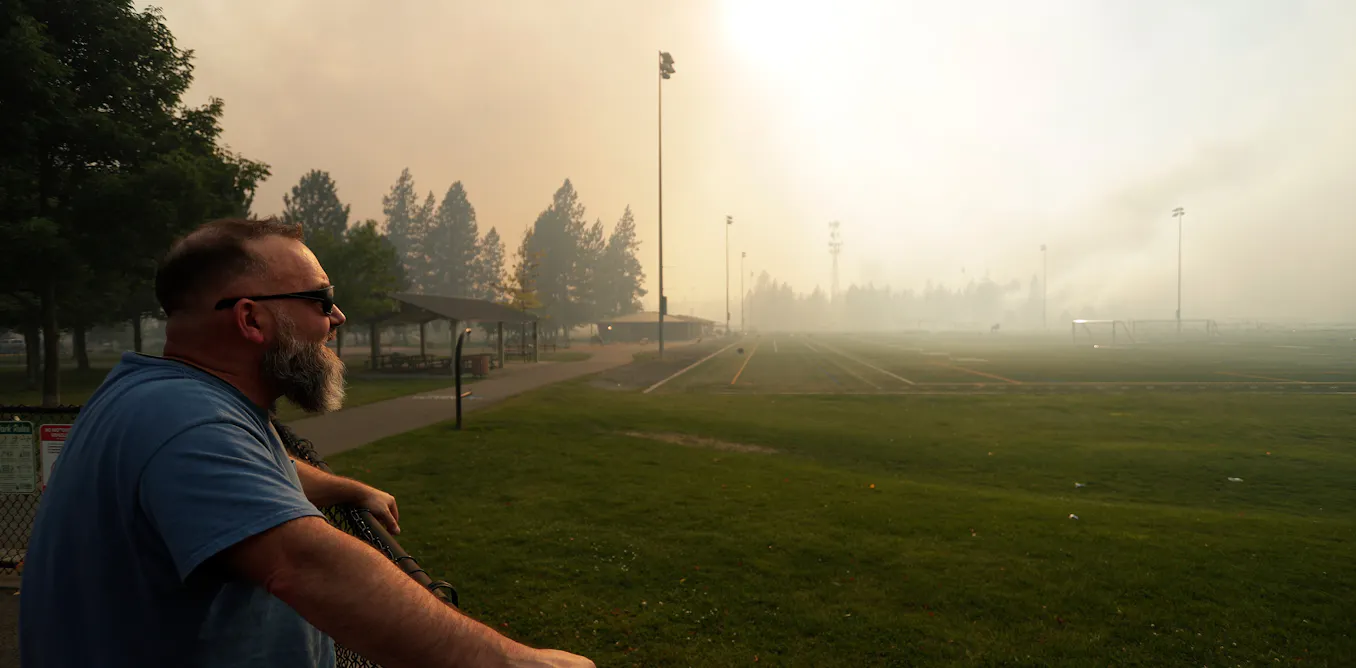
# Spokane Wildfires: How Urban-Wildland Interfaces Amplified the Catastrophe
Extreme fire conditions and suburban development patterns combined to create catastrophic conditions across Spokane's wildland-urban interface. Neighborhoods constructed directly into forests, shrubland, and grasslands provided fuel continuity that allowed fires to spread with minimal resistance from natural or built barriers.
The convergence of several factors accelerated the disaster. Prolonged drought conditions lowered moisture content in vegetation across eastern Washington. High temperatures and low humidity created optimal burning conditions. Strong winds pushed flames rapidly through areas where homes sat interspersed among flammable vegetation.
Suburban sprawl into fire-prone landscapes amplified vulnerability. When residential development occurs without adequate defensible space or fire breaks, homes become fuel loads themselves. Dense tree canopies in developed areas connect ground-level flames to structures. Deadfall from bark beetle infestations, common in drought-stressed forests, accumulated throughout neighborhoods, providing additional kindling.
The Spokane region experienced multiple fires simultaneously. This spread emergency response resources thin. Fire crews struggled to protect individual structures when vegetation burned up to property lines. Limited water supplies and road access in suburban-forest zones complicated firefighting efforts.
Climate change intensifies these risks. Extended fire seasons and hotter, drier conditions extend the window for major blazes. Eastern Washington has shifted toward earlier snowmelt and drier summers over recent decades, a pattern documented by the U.S. Forest Service.
Local planning decisions shaped outcomes. Communities that maintained defensible spaces, cleared vegetation away from structures, and created firebreaks experienced better containment. Areas without such mitigation saw rapid fire spread through neighborhoods.
The Spokane fires demonstrate how catastrophes result from both natural hazards and human choices. Climate conditions provided the ignition potential. Development patterns multiplied vulnerability. Future mitigation requires reth