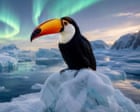
Artificial intelligence-generated and altered images are flooding birdwatching forums, contaminating data that scientists rely on for ornithological research and species monitoring.
Ornithologists and citizen scientists have documented a surge in AI-manipulated photographs on platforms where birders share sightings. These fabricated images create false records of rare species appearing outside their known ranges, undermining the credibility of crowdsourced data that researchers use to track bird populations, migration patterns, and range expansions.
The problem centers on images enhanced or entirely generated by AI tools. While genuine rare sightings like the western reef heron spotted in north Wales in June generate legitimate excitement and scientific value, AI-altered photos introduce noise into datasets that inform conservation decisions. Researchers cannot distinguish authentic documentation from synthetic imagery without manual verification of every submission.
Birdwatching communities have long operated on trust and expertise. Participants submit photos with location data and timestamps, building a decentralized network of observations that complement formal scientific surveys. Universities and conservation organizations integrate these records into species distribution models and biodiversity assessments.
AI-generated bird images present two distinct threats. First, fully synthetic photos create phantom sightings with no basis in reality. Second, AI enhancement tools subtly alter genuine photographs, improving plumage colors or sharpening details in ways that misrepresent what was actually observed. Both corrupt the observational record.
Forum moderators face mounting pressure to authenticate submissions, but most lack tools or expertise to reliably detect AI manipulation. Some platforms now require detailed metadata and multiple angles of rare sightings. Others ask participants to provide proof of identification methods and field notes.
The integrity of citizen science depends on honest documentation. As AI image generation becomes more sophisticated and accessible, the volume of fake submissions will likely increase. Researchers warn that without stronger authentication protocols, platforms that crowdsource bird observations risk becoming unreliable for