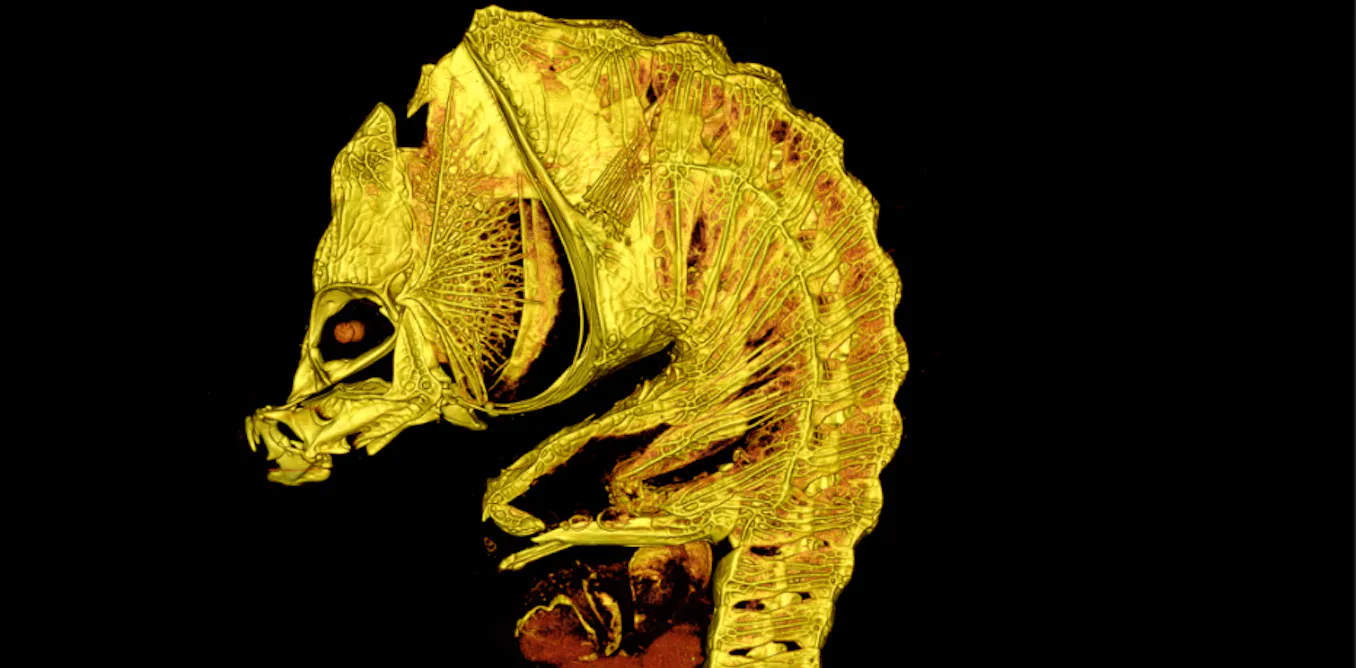
A previously unknown seahorse species has been identified from museum specimens, likely representing a living population in remote ocean depths that remain largely unexplored by scientists.
Researchers examining preserved specimens discovered morphological differences from all known seahorse species. The fish exhibits distinct physical characteristics that separate it from the 46 currently recognized seahorse species worldwide. Museum collections often contain specimens collected decades ago from poorly documented locations, making them invaluable for identifying new species that may never have been formally cataloged.
Seahorse biodiversity remains incompletely mapped. These fish inhabit coastal seagrass beds, coral reefs, and deeper waters where human observation remains limited. The specimen's characteristics suggest the species occupies deep-sea or remote continental shelf habitats rarely visited by research vessels. The discovery underscores how much marine life persists undocumented in ocean regions beyond standard survey zones.
The identification process relied entirely on comparative anatomy. Scientists analyzed skeletal structures, fin morphology, and other physical traits preserved in museum specimens to distinguish this seahorse from related species. This method has proven effective for identifying cryptic or rarely encountered marine organisms when direct field observation proves impractical.
The finding reflects a broader reality in marine taxonomy. Thousands of fish species remain unidentified in museum collections worldwide, with some potentially representing extinct or nearly extinct populations. Every year, researchers discover species previously unknown to science by examining preserved specimens that had been overlooked or miscategorized.
This seahorse discovery reinforces the importance of museum collections as scientific archives. As ocean temperatures rise and human activities expand, documenting biodiversity from existing specimens provides baseline data for understanding how species distributions change over time. The existence of undiscovered seahorse species in poorly explored waters suggests that global fish diversity assessments remain incomplete.
The specimen provides no evidence of current population size or health. Without field surveys in the presumed habitat, scientists cannot assess whether the species remains abundant or