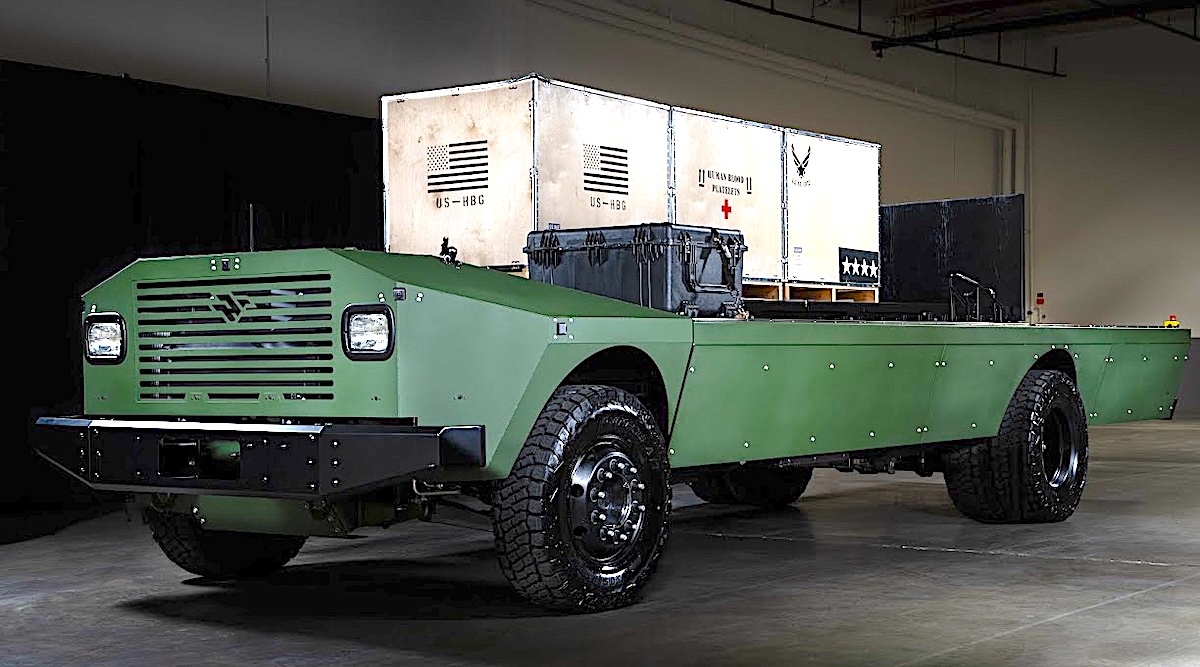
The U.S. Defense Department is moving forward with electrified military vehicles. Harbinger, an American startup, partnered with American Rheinmetall and other contractors to develop an autonomous hybrid flatbed designed for crew-free resupply operations in combat zones.
The vehicle represents a shift in military logistics technology. Traditional fuel-dependent supply convoys expose personnel to risk in hostile environments. A crewless hybrid electric platform removes soldiers from dangerous resupply missions while reducing operational fuel costs and emissions.
Rheinmetall, the German defense contractor with U.S. operations, brings expertise in armored vehicle manufacturing. Harbinger's autonomous technology enables the platform to navigate and deliver supplies without onboard operators. The hybrid powertrain combines electric and combustion engines, allowing extended range critical for field operations while lowering fuel consumption.
The Defense Department has accelerated vehicle electrification efforts across its fleet. Military installations consume roughly 1.2 billion gallons of fuel annually. Shifting toward hybrid and electric platforms reduces both procurement costs and carbon intensity of military operations.
The autonomous flatbed addresses a tactical advantage beyond environmental metrics. Removing crews from supply routes decreases casualty risk. In contested areas where convoys face ambush, unmanned vehicles lower exposure. The technology also enables faster resupply cycles since operators remain at forward bases rather than traveling with cargo.
Timelines for deployment remain unclear from available information. The development partnership suggests prototyping phases ahead before large-scale procurement. Military vehicle programs typically span years from concept to fielding.
This initiative reflects broader Pentagon strategy. The Department of Defense committed to reducing fleet emissions and increasing electric vehicle adoption across non-combat roles. Combat vehicles present greater technical challenges due to weight, range, and power demands. Logistics vehicles like this resupply platform serve as practical entry points for electrification.
Domestic EV manufacturing strengthens the initiative