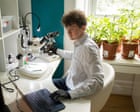
Alfred Drummond-Herdman, a student in Edinburgh, has built a following of millions by filming timelapses of fungi decomposing animal feces. His videos document the microscopic breakdown of cowpats, grouse droppings, and rabbit pellets, capturing fungal growth across weeks and months in accelerated time.
The project has yielded scientific discovery. Drummond-Herdman has identified new fungal species through his documentation work, contributing to mycological research. His bedroom has been converted into a working laboratory, with terrariums and plastic containers replacing conventional furnishings. He receives animal droppings by post from collaborators and members of the public who recognize the value of his work.
Coprophilous fungi, those that grow on dung, play a vital ecological role in nutrient cycling and soil health. These organisms break down complex organic matter and return nutrients to grassland and forest ecosystems. Most species remain poorly documented and understudied, making systematic observation particularly valuable for taxonomy and ecological understanding.
Drummond-Herdman's approach combines citizen science with rigorous documentation. The timelapses reveal fungal diversity and succession patterns that would be invisible to casual observation. His audience engagement demonstrates public appetite for environmental science content that bridges the gap between academic research and accessible visual storytelling.
The project highlights how unconventional research methods can advance knowledge. Universities and research institutions typically rely on laboratory cultures and field surveys. A student with terrariums in a shared flat, supported by an obliging housemate, has created a novel observation platform that generates both scientific data and public engagement.
His work underscores the continued importance of descriptive natural history in the digital age. As biodiversity documentation accelerates, documentation of fungi, particularly coprophilous species, remains incomplete. Drummond-Herdman's videos fill gaps in understanding decomposition processes and