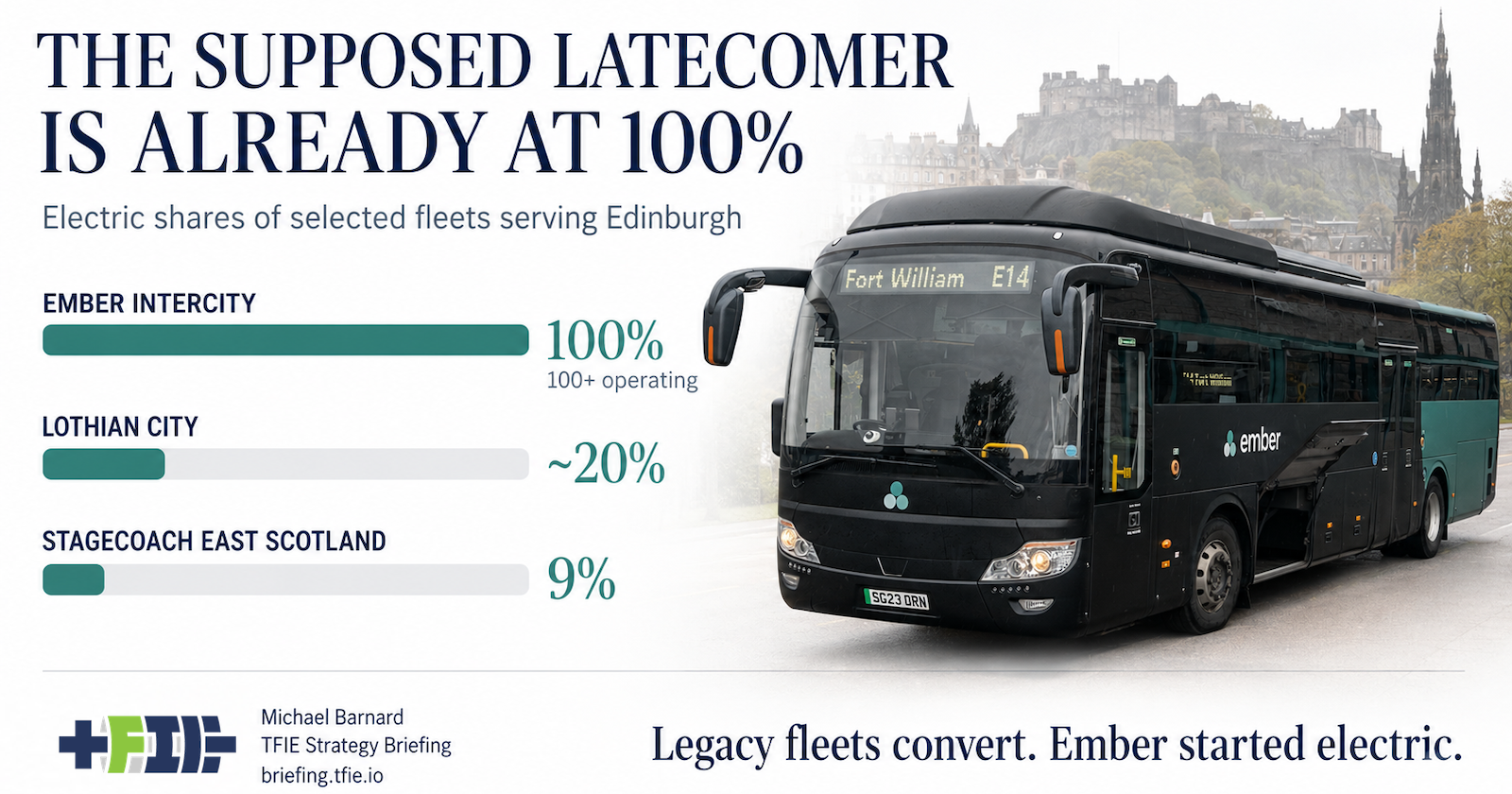
Ember has deployed electric coaches for intercity routes in Scotland, demonstrating that long-distance bus electrification has moved beyond pilot programs into operational service. The battery-electric double-deckers now operate regional connections from Edinburgh alongside the city's existing electrified transit network of trams and urban buses.
Intercity coach electrification represents a harder technical problem than urban transit. Longer routes demand greater range and faster turnaround times than city buses require. Battery weight and charging infrastructure constraints have historically made this segment slower to decarbonize than shorter urban routes. Ember's deployment shows those barriers are falling.
Edinburgh's transit ecosystem provides context. The city has invested in regional rail electrification and expanded tram networks, creating conditions where adding electric intercity coaches becomes feasible. Coordinated infrastructure development across multiple transit modes allows operators to solve charging and grid management challenges more systematically than isolated projects would permit.
The coaches operate on battery power for the full journey without intermediate charging stops, a requirement for passenger comfort on longer routes. This demands larger battery packs than urban buses carry, increasing vehicle weight and upfront cost. Ember's deployment suggests these economics now pencil out when factored across operational life cycle and fuel savings.
Electrifying intercity coach fleets cuts transport emissions in the travel segment that moves the most people over distance in Europe. Coaches carry more passengers per vehicle than cars or trains on many routes, making the sector's decarbonization high-impact per ton of CO2 reduced. Scotland's program accelerates this transition across the UK market.
Other manufacturers will watch Ember's operational data closely. Fleet operators need proof that electric coaches maintain reliability and passenger satisfaction on actual routes before committing capital. Real-world performance data drives adoption faster than lab testing or modeling.
The deployment reflects broader transport electrification that has accelerated since 2024. Battery costs continued declining,