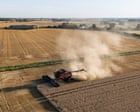
The National Farmers' Union warns Britain faces imminent food shortages as drought intensifies across parts of England and a heatwave persists into next week. The UK Health Security Agency has issued heat health alerts for eight English regions, with temperatures exceeding 30 degrees Celsius expected in multiple areas.
Farmers are working to salvage damaged crops under severe conditions. The prolonged drought threatens yields of staple produce, though the article does not specify which food categories face the greatest risk. The UKHSA flagged that rising temperatures pose health risks to vulnerable populations, but the immediate concern centers on agricultural productivity losses.
Extended heat and water stress reduce crop viability across multiple sectors. The NFU's warning reflects real yield reductions already occurring in affected regions. Without rain, irrigation demands surge while water availability tightens, creating compounding pressure on food production systems already stressed by earlier dry periods.
Britain's reliance on domestic production for fresh vegetables and soft fruits makes drought particularly consequential. A shortened growing season compounds losses. Farmers cannot easily recover from this year's heat damage, meaning reduced supply will likely reach retail channels within weeks. Import dependencies will test supply chain resilience during peak summer demand.
The UKHSA's multi-region heat alert signals exceptional conditions. Sustained temperatures above 30 degrees stress both crop physiology and livestock welfare. Heat-sensitive crops including lettuce, soft fruits, and root vegetables face the most acute pressure.
Food security risks accumulate when production shocks overlap with climate volatility. The NFU statement functions as an early warning system for policymakers and retailers to prepare for supply constraints. Market prices for affected produce typically spike when domestic shortages emerge and import options remain limited or costly.
The forecast continuation of heatwave conditions through next week means additional crop stress with minimal recovery opportunity. Farmers' salvage efforts represent triage rather than full recovery.