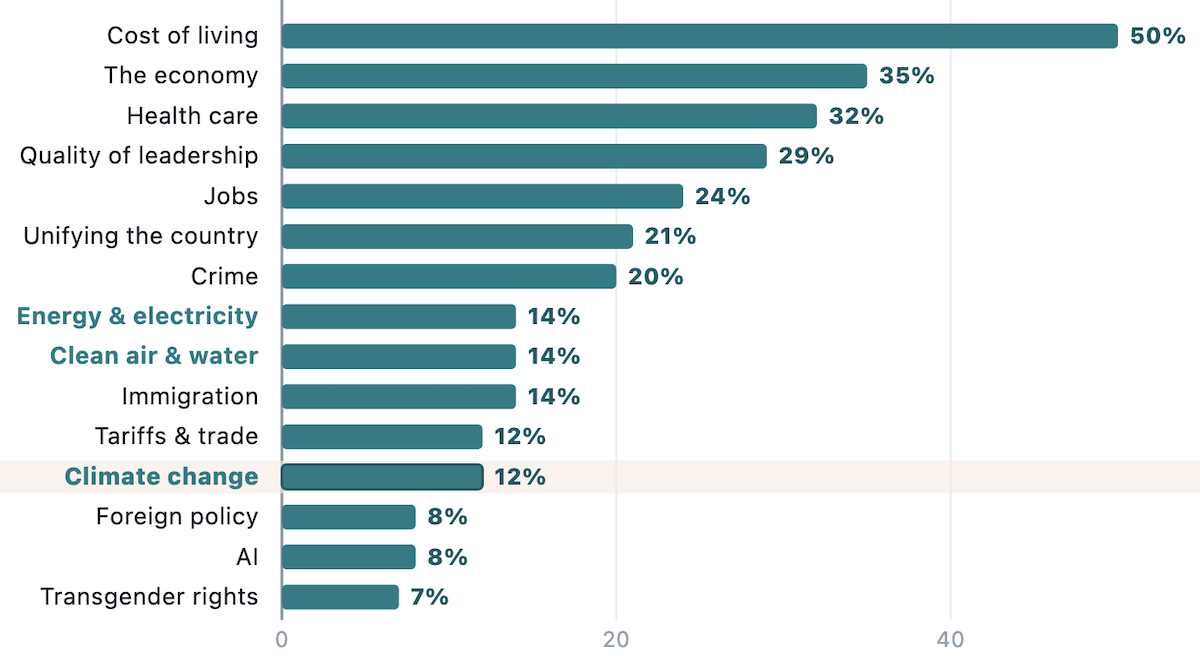
Political campaigns across the country are downplaying climate change despite record heat this summer, a strategy researchers call "climate-hushing." Polling data reveals a paradox: while climate change ranks low on voters' stated priority lists, those who do prioritize climate issues show exceptionally high motivation to vote for candidates supporting climate action.
The disconnect reflects a broader political calculation. Candidates avoid centering climate messaging in general appeals, viewing it as a niche concern despite mounting evidence of its public health and economic consequences. This summer's extreme temperatures created an opening for climate advocacy. Record heat waves affected millions of voters directly, yet campaigns continued sidelining the issue.
Research demonstrates that climate-motivated voters represent a reliable electoral bloc. They turn out consistently and support candidates backing renewable energy expansion, emissions reductions, and climate adaptation measures. Their voting behavior diverges sharply from the general electorate, where climate ranks behind inflation, healthcare, and employment concerns.
The political logic behind climate-hushing assumes general voters won't reward climate action at the ballot box. Campaigns instead emphasize kitchen-table issues polling shows matter to swing voters. But this strategy risks demobilizing an energized subset of the electorate during a period when climate impacts become undeniable.
Meteorological data supports the relevance of focusing on climate. Summer 2025 brought sustained heat records across multiple regions, increased drought conditions in agricultural areas, and spike in temperature-related public health incidents. These tangible effects connected millions of voters to climate science in real time.
Climate advocates argue the political moment is being squandered. Extreme weather events create windows for shifting public understanding of climate as an immediate threat rather than distant concern. By avoiding climate messaging now, campaigns may fail to mobilize voters most likely to support transformative climate policy.
The 2026 election cycle offers another test of whether campaigns will match voter intensity with candidate platforms. Polling gaps between