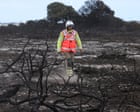
More than 100 firefighters battled a major wildfire at Dunwich Heath near Leiston, Suffolk, for over 24 hours starting Wednesday evening. The blaze occurred within several kilometers of Sizewell, Britain's largest nuclear power station. Fire crews described the situation as "dynamic and potentially changeable" well into Friday afternoon, though stabilization efforts were underway.
The fire caused what officials called "total devastation" across one of the UK's most ecologically important landscapes. Dunwich Heath represents a rare, protected heathland habitat. The scale of ecological damage remains under assessment as crews continued suppression operations.
Sizewell consists of two operational reactors. Sizewell A, a 1966-era Magnox reactor, ceased electricity generation in 2006 but remains in care-and-maintenance mode with spent fuel storage on site. Sizewell B, a 1995 pressurized water reactor generating around 1,200 megawatts, continues full operations. The facility processes approximately 800 cubic meters of cooling water daily from the North Sea.
Nuclear regulators and plant operators conducted immediate safety assessments. The Office for Nuclear Regulation typically requires operators to maintain firebreaks and implement vegetation management protocols around reactor facilities. The proximity of the wildfire to Sizewell raised questions about compliance with these standards and the adequacy of fire containment zones given accelerating wildfire seasons across northern Europe.
Britain experienced record summer temperatures in 2022 and 2023, conditions correlating with increased wildfire frequency. The Dunwich Heath fire coincided with elevated wildfire activity across southern England during an unusually warm summer period.
Environmental groups flagged the incident as evidence of climate-driven fire risks to critical infrastructure. The National Trust, which manages Dunwich Heath, faces significant restoration costs for the damaged heathland ecosystem