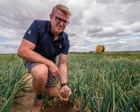
Farmers across Europe report climate impacts are accelerating beyond their capacity to adapt. Tim Young, who operates a Norfolk farm, has documented rainfall patterns since 1976. His data reveals the past six years received only two-thirds the precipitation of previous decades. Water scarcity now ranks as his farm's primary operational threat.
Record-breaking heatwaves swept Europe this summer, compounded by severe droughts and wildfires. The combined effect damages crops directly while driving input costs higher. Young describes the situation as a relentless struggle. Farmers face eroding profit margins as extreme weather becomes routine rather than exceptional.
The speed of climatic shifts poses the core challenge. Agricultural systems developed over generations assume stable temperature and precipitation patterns. When those baselines shift rapidly, crops fail despite established practices. Heat stress reduces yields of staple crops. Drought depletes soil moisture needed for plant growth. Some operations become economically unviable as adaptation costs exceed revenue.
European farming regions confront cascading pressures. Extreme weather events compound. Recovery time between crises shrinks. Water availability declines in key grain-producing regions. Livestock operations struggle to secure feed as pastures dry out. Processing costs climb when transportation and energy prices spike alongside agricultural commodities.
The acceleration creates a temporal problem farmers cannot solve individually. A single drought season permits tactical responses—irrigation, crop switching, cost management. Repeated droughts over six years force structural changes. Some farms must exit production. Others consolidate. Communities lose agricultural capacity.
Market effects ripple outward. Crop failures in major European regions support global commodity price increases. Food security pressures mount in importing nations. Insurance systems strain under mounting claim volumes. Agricultural lending tightens as lenders reassess farm viability in destabilized climates.
Young's rainfall tracking provides objective evidence of what farmers experience directly. Data spanning fifty years removes ambiguity about whether change