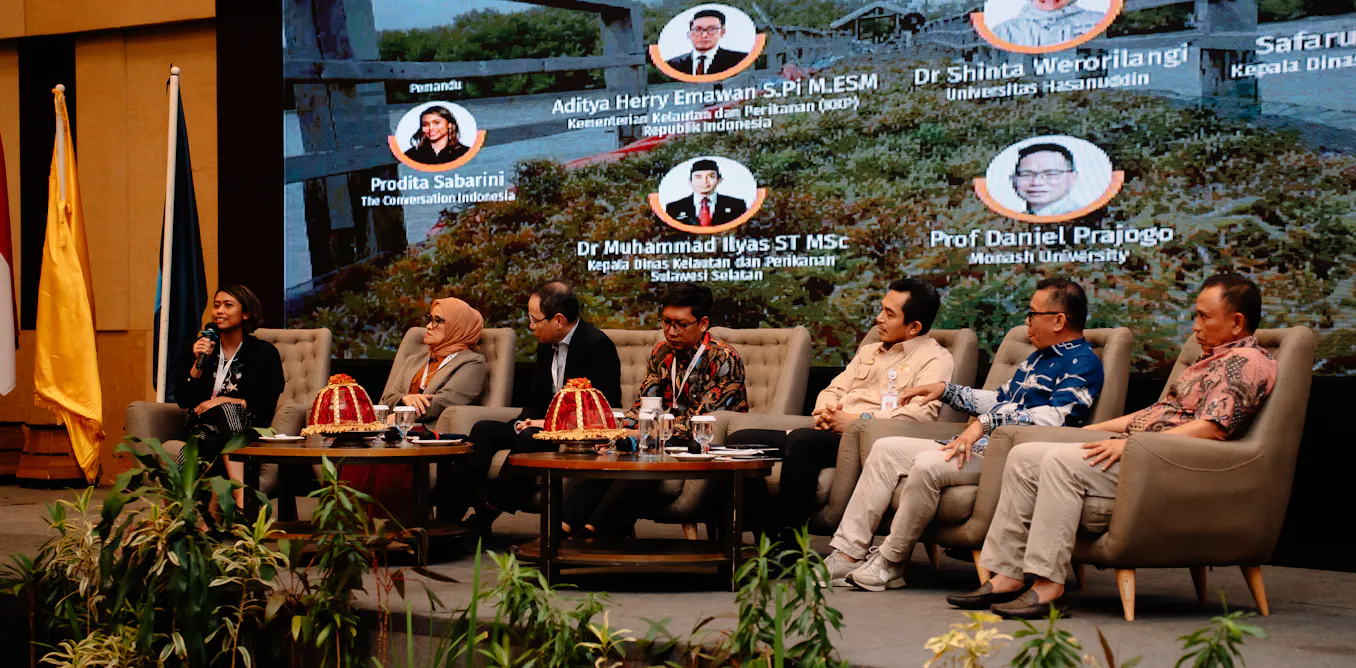
Indonesia's Sulawesi island hosts a research program working to translate scientific findings into government policy, though this initiative confronts a deeper tension between competing economic visions in Jakarta.
The program operates within a broader context of Indonesia's persistent gap between environmental research and policy implementation. Scientists generate data on coastal ecosystems, fisheries, and marine resources across Sulawesi, yet these studies often fail to reach decision-makers or influence regulatory frameworks. The research initiative aims to bridge this divide by embedding researchers within government agencies and convening regular meetings between scientists and policymakers.
Sulawesi's abundant marine resources and biodiversity make it a natural focus for such work. The island contains some of Southeast Asia's most productive fishing grounds and coral reef systems. Local stakeholders envision a "blue economy" model centered on sustainable fishing, aquaculture, and marine tourism that preserves these ecosystems while generating revenue.
This vision directly conflicts with Jakarta's priorities. The national government has aggressively promoted nickel mining expansion across Sulawesi. Indonesia holds the world's largest nickel reserves, and the mineral feeds global battery and stainless steel production. Mining operations generate substantial export revenue and employment, but extraction on Sulawesi has degraded coastal areas, contaminated waterways, and disrupted fishing communities.
The tension reflects a fundamental policy question facing Indonesia. Environmental research from Sulawesi increasingly documents the ecological costs of rapid nickel expansion. Studies on water quality, fisheries productivity, and coastal degradation build evidence for stricter mining regulations. Yet national revenue targets and mining industry influence consistently outweigh these findings in Jakarta's decision-making.
The research program's effectiveness ultimately depends on whether it can shift incentive structures around resource extraction. Local researchers and policymakers in Sulawesi may support marine protection, but their authority remains subordinate to national mining permits and export quotas controlled from Jakarta. Without corresponding shifts