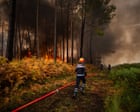
The World Weather Attribution consortium has quantified climate change's direct role in Europe's devastating wildfire season. Researchers determined that global heating made the hot, dry, and windy conditions fueling major wildfires in Spain at least 20 times more likely to occur. In France, the same weather patterns became twice as likely due to human-caused warming.
The study links extreme temperatures and drought directly to greenhouse gas emissions from fossil fuel combustion. Spain faced the most severe amplification effect, where such dangerous fire weather now occurs with dramatically heightened frequency compared to pre-industrial conditions. France experienced a more modest but still substantial doubling of likelihood for identical conditions.
These findings emerge as Europe grapples with a summer marked by record-breaking heat waves and widespread conflagrations. The analysis adds to mounting evidence tying specific extreme weather events to the warming atmosphere. Scientists increasingly use attribution science to establish these causal connections rather than treating catastrophic weather as random occurrence.
The consortium's work reflects a shift in climate research methodology. Rather than speaking only about long-term trends, researchers now calculate how much human activities have altered the odds for individual weather systems. This approach provides policymakers and the public with concrete evidence of climate impacts occurring in real time.
Spain's 20-fold increase in wildfire weather likelihood carries particular weight. Such a dramatic acceleration demonstrates that parts of Europe now face fire conditions that would have been extraordinarily rare just decades ago. The Mediterranean region, already prone to summer fires, now operates under fundamentally different atmospheric conditions shaped by decades of emissions.
The research underscores why emissions reductions matter urgently. Each fraction of a degree of warming further increases the probability of such catastrophic weather patterns. For Spain and France, continued heating guarantees more frequent and intense fire seasons unless global carbon emissions drop substantially and quickly.