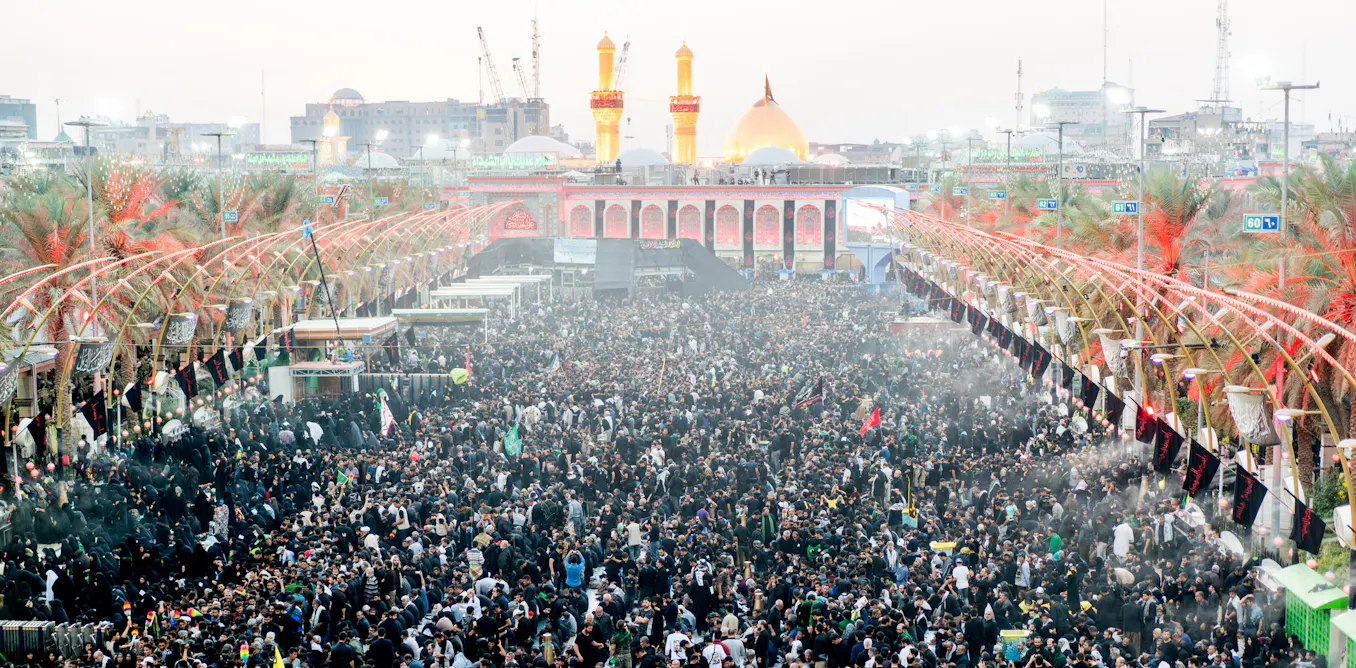
Millions of Shiite Muslims undertake an annual pilgrimage to Karbala, Iraq, walking vast distances to commemorate Husayn, the grandson of the Prophet Muhammad. The Arbaeen pilgrimage, one of the world's largest religious gatherings, draws its spiritual weight from events that occurred in 680 CE, when Husayn was killed at the Battle of Karbala. His death established a theology of sacrifice and resistance that remains central to Shiite Islamic practice.
The pilgrimage occurs 40 days after Ashura, the Islamic month commemorating Husayn's death. The name Arbaeen derives from the Arabic word for 40, reflecting this temporal significance. Participants, numbering in the millions annually, travel on foot across deserts and through towns to reach Karbala's holy shrines. Many walk for weeks, covering hundreds of kilometers.
The journey carries profound religious meaning. Pilgrims view the walk as an act of mourning and solidarity with Husayn's suffering. The pilgrimage reinforces theological concepts fundamental to Shiite Islam: the importance of bearing witness to injustice, the virtue of self-sacrifice, and the rejection of tyranny. Husayn's refusal to pledge allegiance to an unjust ruler became a model for righteous resistance that shapes how Shiite communities understand faith and ethics.
The scale of Arbaeen distinguishes it as a demographic phenomenon. Security forces mobilize extensively to manage crowd flows and prevent stampedes. Iraq's government recognizes the pilgrimage's economic and cultural weight, investing in infrastructure improvements to accommodate the influx. Volunteers from across the Shiite world establish stations offering water, food, and medical care to walkers.
The pilgrimage also serves political functions. It demonstrates Shiite unity across national boundaries, with