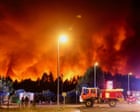
A massive wildfire in southwestern France has forced 200,000 people from their homes and consumed 42,000 hectares, exhausting firefighting crews in what officials describe as a "war of attrition." The blaze, which began last week near Le Porge, grew so rapidly that the village was evacuated within 14 hours of ignition.
The fire operates under conditions that overwhelm conventional firefighting capacity. Temperatures near the fire reach 35 degrees Celsius while crews battle acrid smoke and ash. Responders include 200 firefighters, soldiers, police, gendarmes, forestry workers, and volunteers coordinating in shifts at emergency centers. One firefighter quoted in the reporting describes the experience starkly: "We stared into an abyss."
France's fire season has intensified under warming conditions. The 42,000-hectare footprint places this fire among the country's largest recent blazes. Heat waves and drought conditions across Europe have created tinderbox conditions in Mediterranean regions, where vegetation dries faster and fire behavior becomes unpredictable.
The response reveals the strain placed on emergency services during major fire events. Coordination between military and civilian firefighting units, alongside evacuation of hundreds of thousands of residents, stretches logistics and personnel across weeks of continuous operations. Recovery efforts extend beyond suppression to include property damage assessment, displaced resident services, and eventual forest restoration.
Climate change has lengthened fire seasons across southern Europe and intensified peak fire behavior. Research from European fire agencies documents increases in both fire frequency and severity in regions traditionally prone to summer wildfires. Water availability for firefighting operations becomes limited during drought conditions, forcing crews to rely on aerial tankers and strategic fuel breaks.
The Le Porge megafire reflects broader patterns affecting France's Gironde region, which experienced major wildfires in 2022. Those