# Russia's Military Indoctrination of Ukrainian Children in Occupied Territories
Russian forces operating in occupied Ukrainian territories have systematically indoctrinated children into military ideology, violating international humanitarian law protections for minors in conflict zones.
The investigation documented widespread programs that expose Ukrainian children to military training, nationalist propaganda, and ideological instruction aligned with Russian state narratives. These efforts target schoolchildren in occupied regions, incorporating military content into curricula and organizing youth into paramilitary organizations.
The Fourth Geneva Convention explicitly prohibits occupying powers from indoctrinating children in occupied territories. Additional protocols to the Geneva Conventions further restrict the militarization of minors in conflict settings. Russia has ratified these treaties, creating clear legal obligations to protect children from such practices.
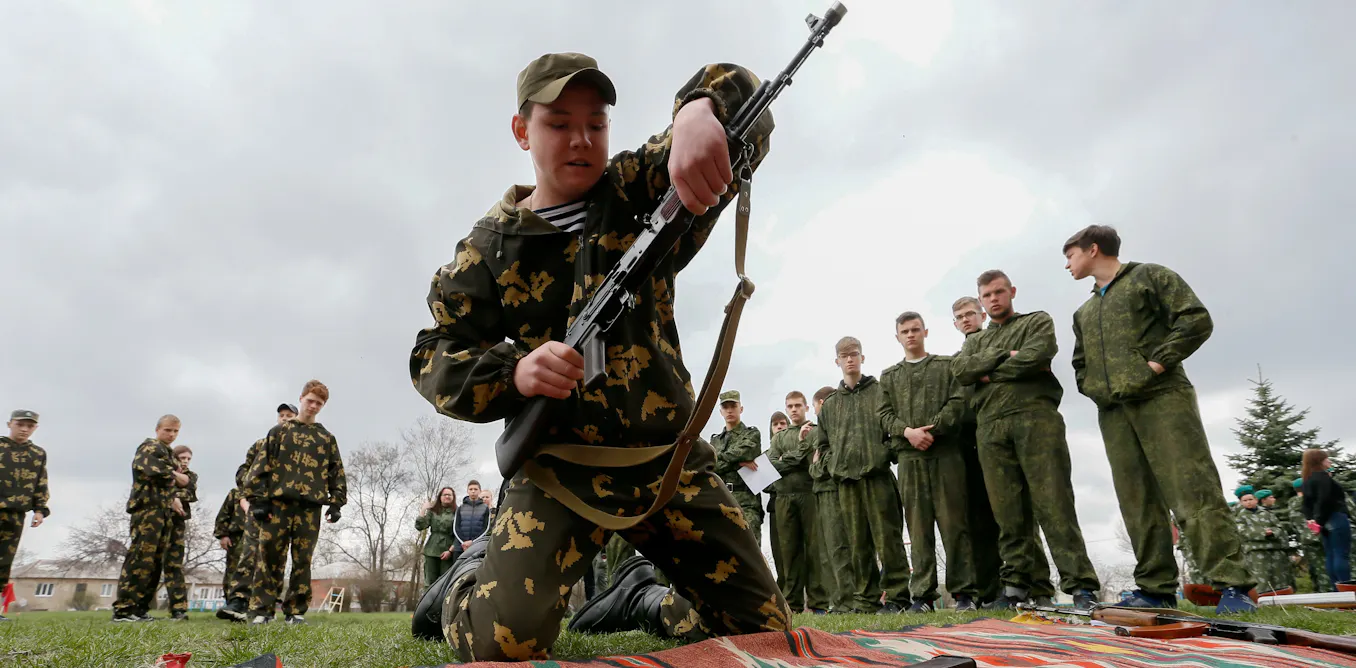
Investigators found evidence of coordinated state-sponsored programs rather than isolated incidents. Schools in occupied areas teach Russian military history and ideology. Youth organizations modeled on Russian structures recruit children for paramilitary activities. Children participate in military exercises and weapons training under occupation authority supervision.
The scope extends beyond classroom instruction. Russian forces have established camps and youth brigades that provide military training to Ukrainian minors. Participants receive instruction in weapons handling, combat tactics, and ideological content promoting Russian state positions.
These practices constitute war crimes under international law. The International Criminal Court defines recruitment and use of children in armed conflict as a grave breach of the Geneva Conventions. Indoctrination programs that alter children's political beliefs through coercion during military occupation violate additional protocols.
Ukrainian authorities and human rights organizations have documented these programs through survivor testimonies, school records, and direct observation in liberated territories. The evidence indicates systematic implementation rather than ad-hoc operations.
The long-term effects on affected children remain uncertain but concerning. Exposure to military indoctrination during formative years can create lasting psychological, social, and developmental impacts. Separ