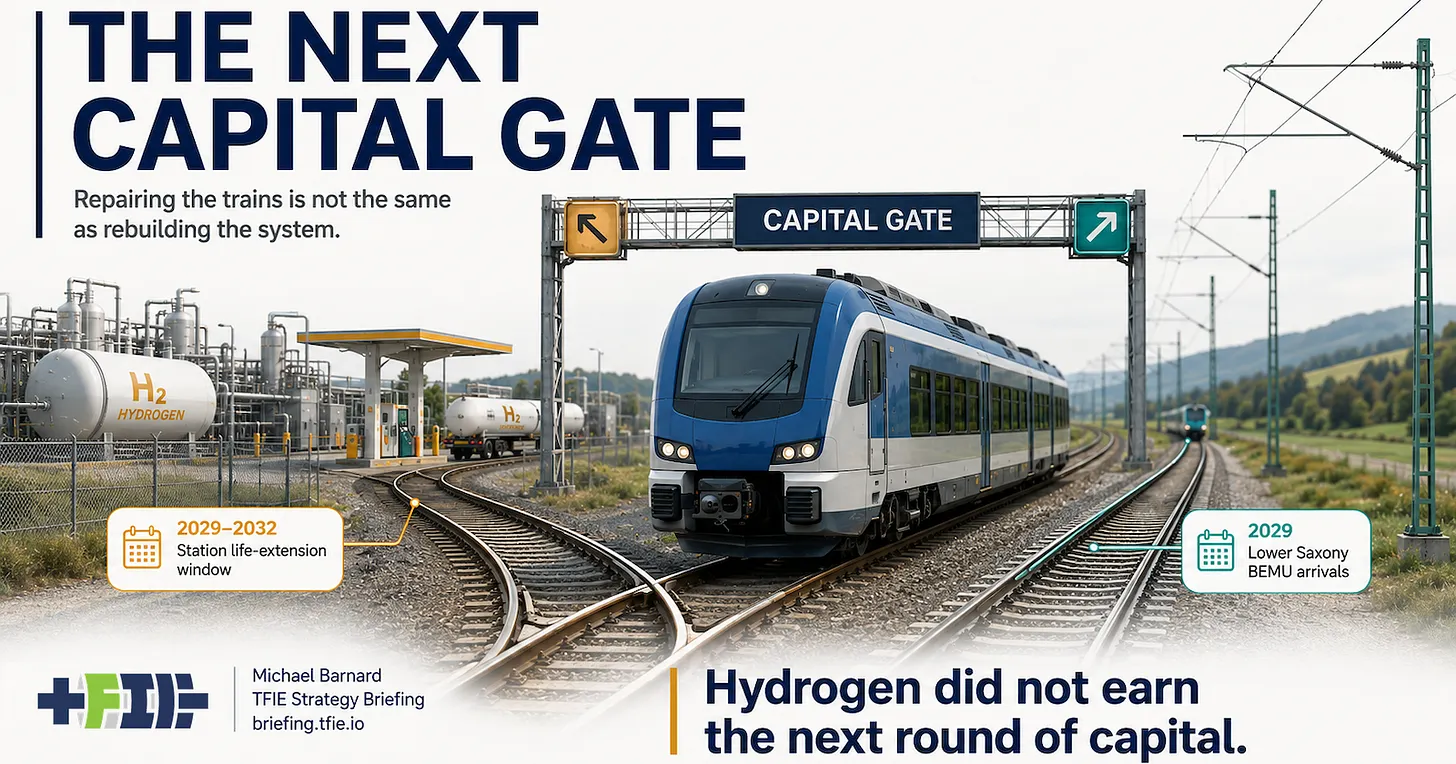
Lower Saxony faces a costly reckoning with hydrogen trains that advocates once touted as Germany's rail future. The state now confronts whether to spend heavily maintaining an underutilized hydrogen infrastructure or pivot to battery-electric trains.
The hydrogen multiple units operating in Lower Saxony represent a deliberate technology choice made years ago. Alstom supplied the trains to replace diesel services on regional routes. The system required dedicated hydrogen refueling stations and supply chains tailored to the technology. Initial deployment seemed viable.
But market realities have shifted. Battery-electric trains have advanced rapidly. Manufacturers now offer proven battery systems with lower operating costs and simpler infrastructure requirements compared to hydrogen's specialized fuel supply networks. Battery trains eliminate the need for hydrogen production, storage, and distribution logistics that remain expensive and complex.
Lower Saxony's hydrogen fleet faces a fundamental problem: it operates below capacity on routes where ridership has not met projections. Low utilization spreads fixed costs across fewer passengers, making the hydrogen system economically inefficient. The state must now decide between two paths.
Option one involves extending the hydrogen system's life by investing in maintenance, infrastructure upgrades, and continued hydrogen fuel supply. This approach locks the state into declining technology with rising per-unit costs as utilization remains low.
Option two requires replacing hydrogen trains with battery-electric units. New battery trains cost capital upfront but offer lower lifetime operating expenses, simpler maintenance, and alignment with broader rail electrification strategies.
Political announcements about technology superiority rarely trigger infrastructure transitions. Financial pressure does. When renewal decisions arrive, state transport budgets will compare the cost of keeping hydrogen operational against purchasing battery alternatives. Budget constraints typically resolve such debates quickly.
This scenario plays out across Europe as hydrogen rail projects face similar economics questions. Germany promoted hydrogen trains as a climate solution for non-electrified routes. Some projects have delivered modest success. Others,