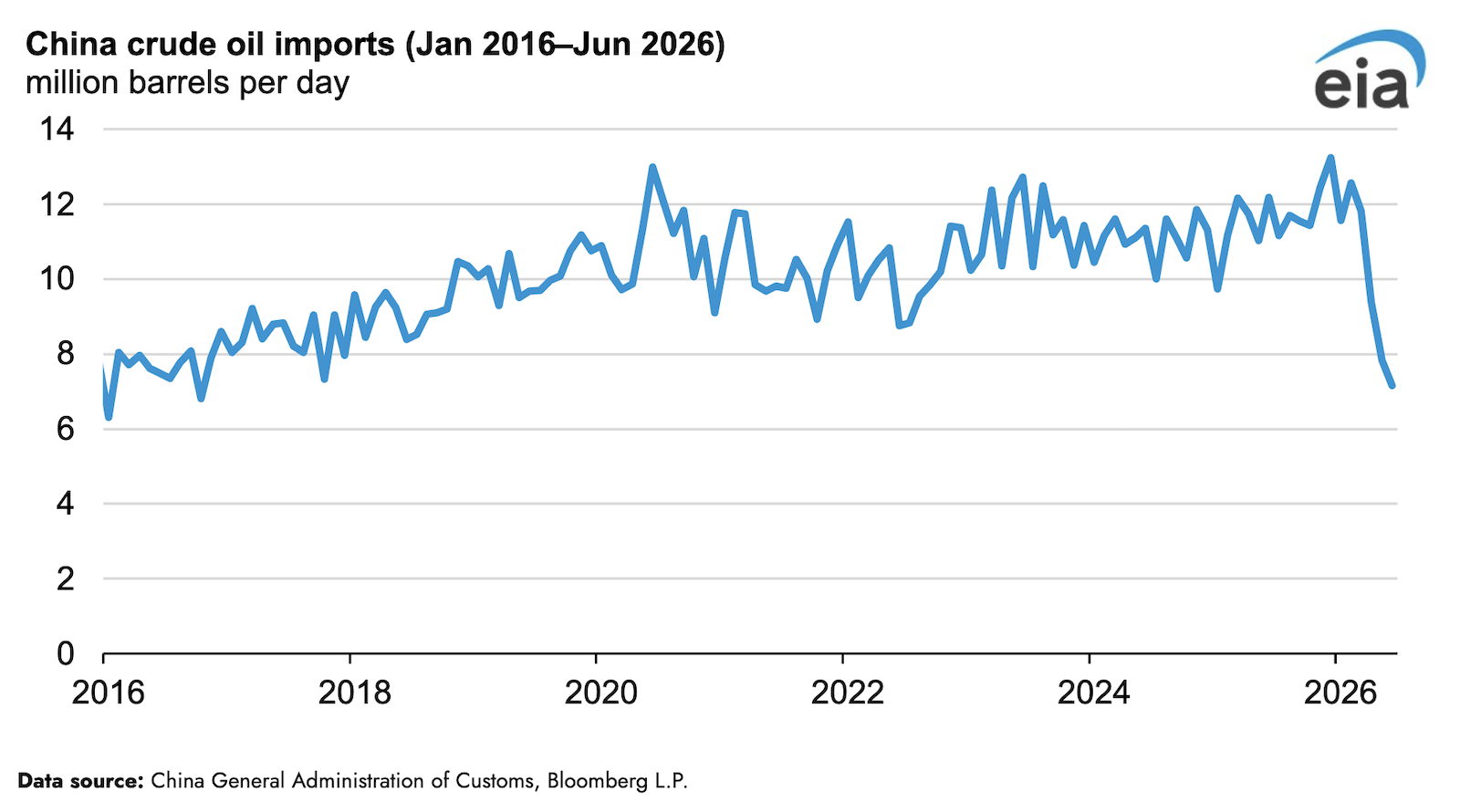
China reduced crude oil imports during the second quarter of 2026 as higher prices stemming from supply disruptions through the Strait of Hormuz dampened demand from the world's largest oil importer. The price surge, triggered by constrained flows through the critical chokepoint that handles roughly one-third of global seaborne petroleum, prompted Chinese refineries and energy buyers to scale back purchases. Lower imports from Beijing subsequently softened global oil prices that would have climbed higher without the demand reduction.
The Strait of Hormuz disruption reflects ongoing geopolitical tensions in the Middle East and underscores how energy security concerns ripple through global markets. As the dominant crude importer, China's purchasing decisions directly influence international prices and supply dynamics. When Beijing reduces intake, it counterbalances supply shocks that would otherwise trigger sustained price increases affecting economies worldwide.
The 2Q26 pattern demonstrates how demand destruction operates during supply crises. As prices climb, major consumers cut purchases rather than absorb elevated costs, creating a price ceiling effect. This mechanism has historically contained oil price spikes during Middle East conflicts or infrastructure failures. China's response reflects both economic pragmatism and the country's substantial crude stockpiling capacity, which allows refineries to defer purchases during price peaks.
Energy analysts track Chinese import data closely because shifts in Beijing's crude appetite signal broader trends in global energy demand and geopolitical risk. The second quarter decline suggests that supply disruptions, while concerning for energy security, do not automatically translate into runaway prices when major consumers can modulate their intake. However, sustained or worsening disruptions through the Strait of Hormuz could eventually force prices higher if constrained supply persists beyond the point where demand reduction can compensate.
The import slowdown also reflects China's ongoing energy transition, though crude consumption remains central to the economy. As renewable capacity expands and electric vehicle adoption accelerates,