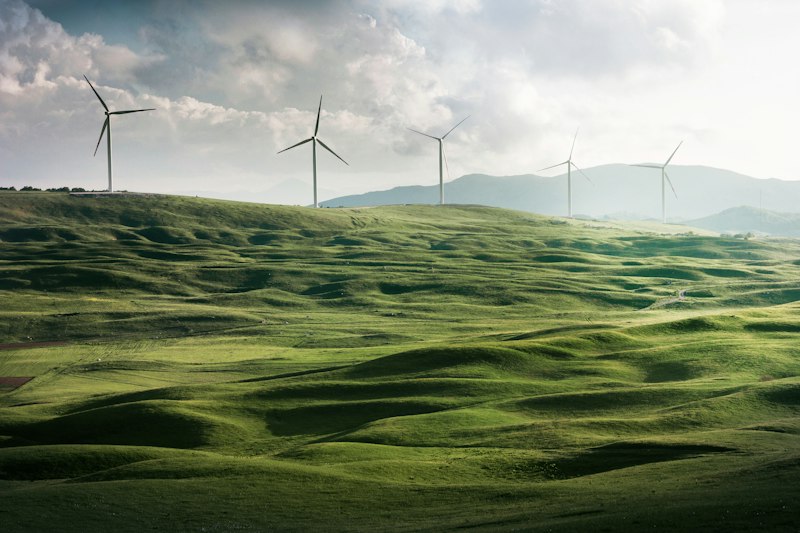
Here's what we're doing wrong in renewable energy right now: we're throwing confetti at the supply side while letting the distribution system crumble into irrelevance.
The numbers tell the story. Battery manufacturers are posting record profits. Solar deployment continues its exponential climb. Wind farms are sprouting across continents. And yes, these are genuine wins for decarbonization. But notice who's getting the spotlight, the investment, and the industry love? The companies making things. The ones with tangible products and quarterly earnings to brag about.
Now ask yourself: who's paying attention to the grid infrastructure that has to actually move all this power to where people need it?
The renewable energy industry has created a perverse incentive structure, and we should call it out.
The glamorous play in renewables is manufacturing. Make batteries, make panels, make turbines. These are capital-intensive, scalable businesses with clear metrics and venture-backing appeal. A company that manufactures battery packs can show growth curves that impress investors. They can announce capacity expansions. They can claim they're "solving" the energy transition.
But here's the inconvenient part: none of that matters if the grid can't distribute the power efficiently.
Grid modernization is a different beast entirely. It's expensive, it's regulatory-heavy, it involves thousands of utilities with competing interests, and the financial payoff is abstract. You can't point to a grid upgrade and say it generated 42 percent profit growth the way CATL can. There's no earnings call magic in transmission lines. The work is unglamorous, fragmented, and chronically underfunded.
This creates a problem that should concern anyone actually interested in the energy transition. Renewable manufacturers have every reason to keep producing more capacity. The incentive aligns with their business model. But the system that distributes that energy? It's being asked to do more with structures designed for a different era, staffed by utilities operating on legacy regulatory frameworks that don't encourage investment in modernization.
We're essentially rewarding the companies that sell the renewable hardware while financially punishing the unglamorous work of making the grid smart enough to handle what those manufacturers produce.
Look at the broader context. Electric vehicles are becoming grid assets, data centers are consuming power at unprecedented rates, and solar installations keep climbing. These are all real trends that the industry loves to discuss. But each one adds demand on infrastructure that's already strained. The grid doesn't get to opt out of this energy transition. It just gets asked to absorb everything without the investment or regulatory changes it actually needs.
The incentive misalignment runs deep. Renewable energy companies benefit from production increases. Grid operators benefit from stability and cost control. These aren't the same goal. And the current investment and media ecosystem rewards the manufacturers far more generously than it rewards the infrastructure builders.
What should change? For starters, we could stop treating grid modernization as a footnote to the renewable energy story. It's not a supporting player. It's foundational. Second, we could examine the regulatory structures that make grid investment less attractive than manufacturing investment. Third, we could direct some of the enthusiasm and capital flowing toward battery makers toward the utilities and grid technology companies that actually make distribution possible.
The renewable energy industry isn't failing. It's succeeding exactly according to the incentives we've set up. That's the problem. We've built an ecosystem that celebrates the visible, profitable parts of the transition while systematically underinvesting in the invisible backbone that makes everything work.
That's not an energy transition. That's a supply-chain expansion with a grid that's increasingly out of step.