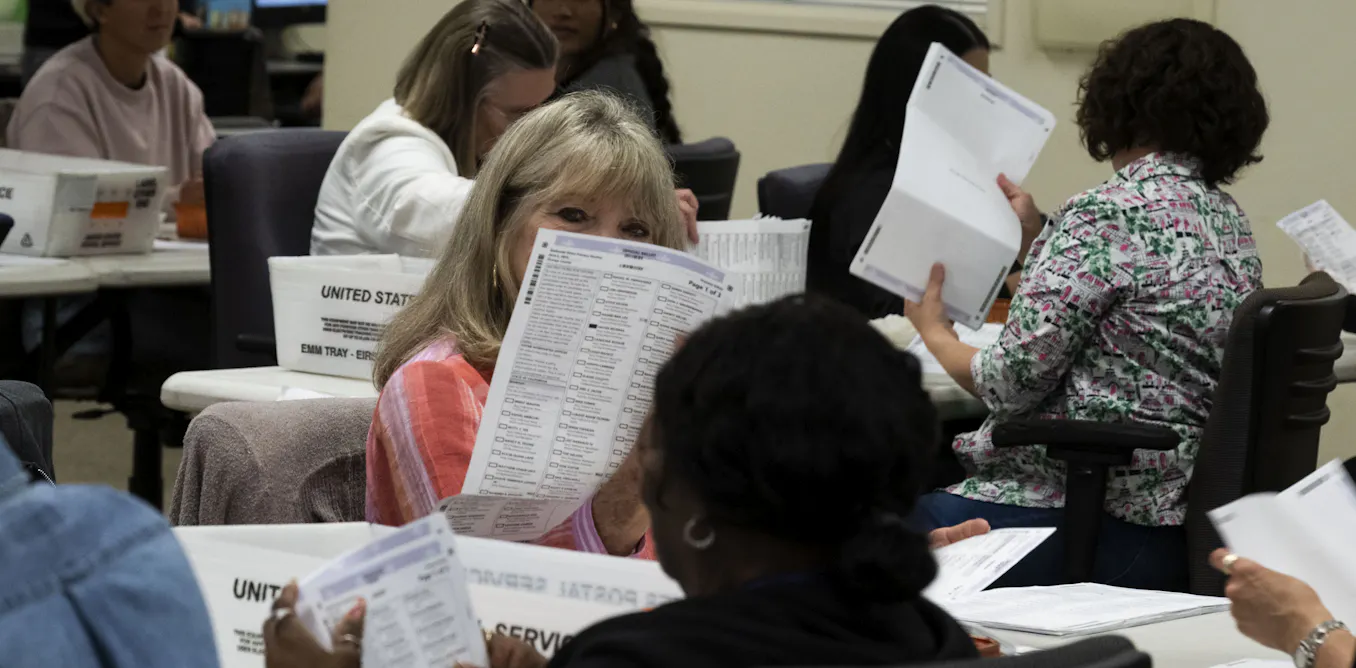
The Trump administration filed an appeal to the Supreme Court seeking to revive an executive order that would restrict mail-in voting, after lower courts rejected the directive. The order directly challenges constitutional authority held by states over election administration.
The executive order attempts to impose federal limits on mail-in voting procedures across all states. Lower courts blocked the order on constitutional grounds, finding that it violated the Elections Clause and the Tenth Amendment, which reserve election powers to individual states. The administration's appeal argues the federal government possesses authority to regulate voting methods in federal elections.
Constitutional scholars note that the Elections Clause grants Congress, not the President, power to regulate federal elections. An executive order unilaterally setting voting limits exceeds presidential authority under current law. The Clause explicitly states that each state legislature determines election procedures, though Congress may alter those rules through legislation.
The case centers on fundamental questions about executive power and federalism. States currently set mail-in voting requirements, including eligibility criteria, deadlines, and ballot processing procedures. The administration's order would override these state-level rules through executive action without congressional approval.
The Supreme Court's decision will determine whether presidents can impose voting restrictions through executive orders or whether election regulation remains exclusively within state and legislative domains. The timing is significant, arriving just as early voting begins in several states.
Election law experts warn that a ruling favoring the administration could establish precedent for unchecked presidential control over voting procedures in federal elections. States have argued the order creates confusion and logistical problems during active election cycles.
The Court's response will clarify the constitutional limits of executive power over elections and whether states retain their traditional role in setting voting procedures. Oral arguments and a decision are expected in coming weeks.