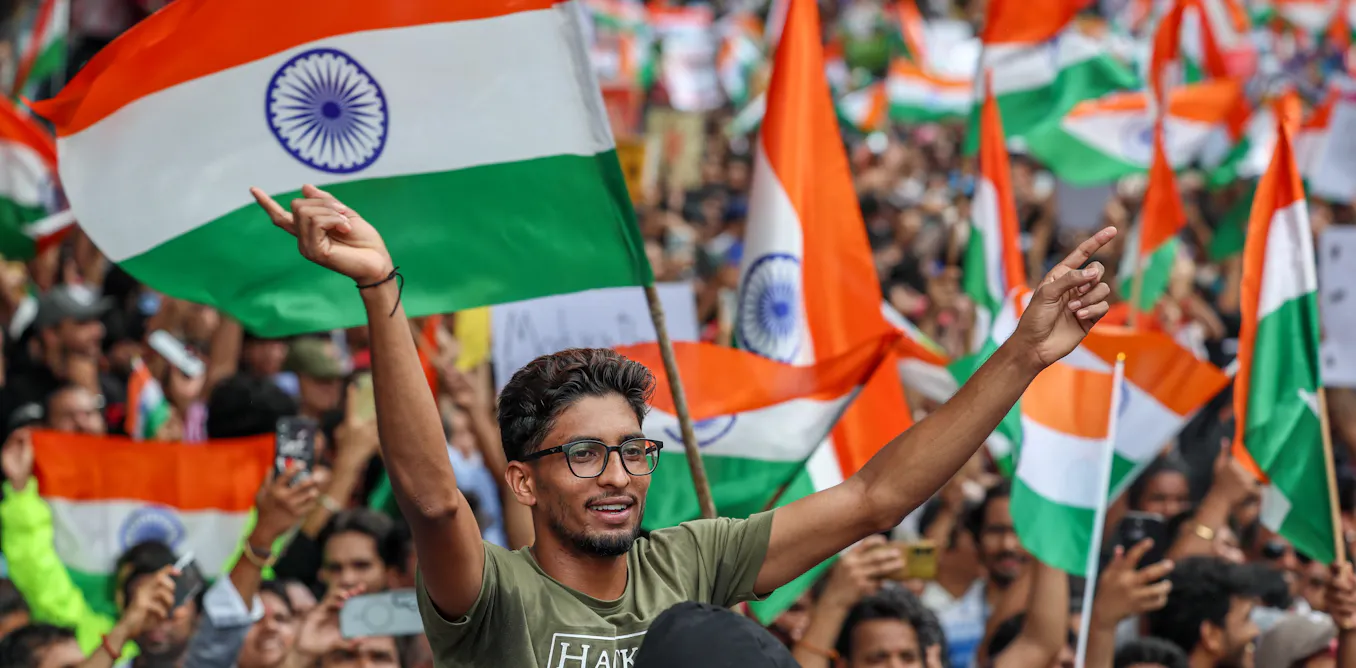
India's student-led protests demanding civil service reform forced the resignation of Union Public Service Commission chairperson Raj Kumar Singh, but the underlying employment crisis remains unresolved. The demonstrations, which began in June 2024 after a flawed recruitment exam, exposed systemic failures in how India selects and trains its bureaucracy.
The root problem runs deeper than exam administration. India's civil service recruits roughly 13,000 officers annually across all levels, far below the 65,000 positions the government estimates it needs. Young people face a decade-long hiring freeze in many sectors. Nearly 40 percent of India's population is under 25, yet formal employment opportunities have stalled since 2020.
The UPSC exam itself presents structural barriers. Candidates typically attempt the notoriously difficult test five to ten times, spending years in preparation. Only 0.1 percent of applicants succeed. The process filters for test-taking ability rather than governance competence, critics argue, and favors those with means to afford expensive coaching.
Government data from 2023 showed youth unemployment at 8.2 percent, with underemployment far more widespread. Many graduates work in gig economy positions or agriculture despite holding degrees. The protests reflect desperation rather than transient frustration.
Addressing the crisis requires the government to expand recruitment across federal, state, and local agencies immediately. Administrative capacity constraints cannot justify delays when millions wait for stable work. Officials must also modernize selection criteria to evaluate problem-solving skills and domain knowledge, not just exam performance.
The resignation provides political relief but no reform roadmap. Structural changes demand investment in hiring infrastructure, transparent timelines for recruitment drives, and coordination between union and state governments. Without these shifts, anger will resurface among each successive cohort facing the same blocked pathways.
The cockroach movement exposed India's failure to absorb