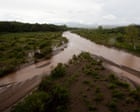
A UN environmental specialist has documented how US companies exploit Mexico's weaker pollution enforcement to dump industrial waste and hazardous materials across the border. Marcos Orellana, a UN special rapporteur, found that Mexican communities face acute health risks from accumulated toxins that would violate strict US environmental standards.
Orellana's investigation, shared with the Guardian and Quinto Elemento Lab, reveals a pattern where US corporations shift production to Mexico to avoid compliance with Clean Air Act and Clean Water Act regulations. Lax environmental standards and inadequate government oversight enable polluters to operate without meaningful penalties. Mexican border regions bear the costs of this arrangement through contaminated air, water, and soil.
The mechanism is straightforward. US companies establish manufacturing facilities across the border, then export finished goods back north while leaving environmental damage in Mexico. Chemical plants, refineries, and waste processing operations concentrate in cities like Monterrey, where residents report respiratory illness and other pollution-related diseases at elevated rates. Orellana documented cases where imported hazardous waste accumulates in Mexican facilities with minimal regulatory inspection.
Mexico's environmental agency, PROFEPA, lacks the funding and personnel to monitor industrial zones effectively. Cross-border waste streams remain largely untracked. When violations occur, fines are minimal compared to US penalties, making non-compliance economically rational for operators.
The toxic exposure falls hardest on low-income Mexican communities near industrial corridors. Children in these areas experience higher asthma rates. Groundwater contamination threatens drinking water supplies. Agricultural land becomes unusable.
Orellana called for stronger US corporate accountability and Mexican regulatory capacity building. He urged Mexico to enforce existing environmental laws more rigorously and to restrict imports of hazardous waste. The US should require environmental impact assessments for operations of American companies operating south of the border.
This arrangement persists because it benefits corporate bottom lines while