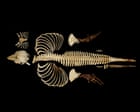
Scientists have digitally reconstructed the skeleton of a female vaquita, the world's rarest marine mammal, using medical imaging and ultra-high-resolution micro CT scans. The vaquita population numbers fewer than a dozen individuals in Mexico's northern Gulf of California.
The three-dimensional digital model preserves the porpoise's complete anatomy for future research and conservation work. Researchers employed a combination of imaging techniques and photography to capture skeletal details that would otherwise be lost if the specimen degraded or became inaccessible.
The vaquita faces extinction primarily from illegal gillnets used in fishing operations throughout its habitat. These nets trap and drown the small porpoise, which grows to only about four feet in length. Mexican authorities have struggled to enforce fishing restrictions in the remote gulf region, where organized crime syndicates profit from poaching protected species.
Conservation groups have pushed for a permanent ban on gillnet fishing in vaquita habitat, but enforcement remains inconsistent. The species' population has collapsed from around 600 individuals in the 1990s to fewer than ten today. Some experts estimate the vaquita could vanish within months or years without dramatic intervention.
The digital archive serves multiple purposes. Researchers can study skeletal structure to understand how the vaquita adapted to its specific gulf ecosystem. Scientists can compare its anatomy with related porpoise species to identify unique evolutionary characteristics. The model also becomes a permanent record should the species go extinct, preserving biological knowledge for future study.
This preservation effort reflects a shift in conservation strategy. As populations shrink below viable breeding numbers, institutions focus on documentation, genetic banking, and maintaining scientific data. The vaquita represents a conservation failure despite decades of international agreements and protection efforts.
Mexico established a vaquita refuge in 1975, one of the world's first marine protected areas, but illegal fishing continues. Recent proposals for captive breeding