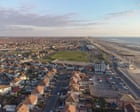
A government-funded study examining kidney cancer rates near an AGC Chemicals Europe factory in Thornton-Cleveleys, Lancashire has drawn scrutiny from independent experts over its conclusions regarding exposure to PFOA, a carcinogenic forever chemical.
The AGC plant emitted approximately 49 tonnes of PFOA between the 1950s and 2012, when the company ceased production of the substance. PFOA, perfluorooctanoic acid, was globally banned in 2020 due to documented health risks. The factory, acquired by AGC Chemicals Europe in 1999, operated during decades when the chemical's dangers were inadequately understood or communicated to surrounding communities.
Experts have raised concerns that the government-funded research downplayed or mischaracterized the connection between PFOA emissions and elevated kidney cancer rates observed in the vicinity. The analysis of cancer clusters near industrial sites emitting persistent organic pollutants requires rigorous epidemiological scrutiny, particularly when previous studies have linked PFOA exposure to increased renal cancer risk in occupational and environmental contexts.
PFOA belongs to a class of synthetic chemicals called per- and polyfluoroalkyl substances (PFAS), termed forever chemicals because they resist degradation in the environment and bioaccumulate in human tissue. The compound migrates through groundwater and soil, contaminating drinking water supplies and agricultural land across affected regions.
The study's methodology and interpretation now face questions from the scientific community about whether potential exposure pathways, including groundwater contamination and historical occupational exposures, received adequate consideration. Independent assessment of the research becomes necessary to determine whether the conclusions align with available epidemiological evidence or reflect institutional reluctance to establish causality between industrial emissions and documented health harms.
The Thornton-Cleveleys case exemplifies ongoing tensions between industrial activity, environmental contamination,