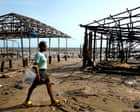
Ayetoro, a coastal Christian settlement founded in Nigeria during the 1940s, faces obliteration from accelerating sea level rise and erosion. More than half the community has already vanished beneath Atlantic waters, leaving residents with dwindling options for survival.
On February 15, 2019, residents woke to find the ocean had consumed homes and businesses overnight. Arowo Victoria, a 60-year-old retired midwife, lost her small shop to the surge, destroying a livelihood she had built with borrowed money after leaving her nursing career.
Ayetoro was originally established as a utopian Christian community built on Lagos lagoon wetlands. Its location, chosen for spiritual rather than practical reasons, left residents exceptionally vulnerable to coastal flooding and land subsidence. The combination of global sea level rise linked to climate change, local land sinking, and inadequate coastal defenses has created an emergency for the approximately 30,000 people still inhabiting the settlement.
The loss of Ayetoro reflects Nigeria's broader coastal vulnerability. The country's Niger Delta region experiences some of the world's fastest rates of land subsidence due to oil extraction and natural geological processes. Rising seas now threaten Lagos and smaller communities along Nigeria's entire coastline.
Residents face impossible choices. Government relocation programs have stalled or failed to materialize. Many lack resources to move inland or rebuild elsewhere. Those who remain construct temporary structures knowing the Atlantic may claim them within months. Women like Victoria depend on informal trade and fishing for survival, making displacement economically catastrophic.
Climate scientists project continued sea level rise along West Africa's coast at rates exceeding global averages. Nigeria's government has acknowledged the threat but struggles to fund comprehensive adaptation measures. International climate finance flows remain insufficient for the scale of displacement occurring.
Ayetoro's disappearance illustrates how climate change amplifies existing vulnerabilities