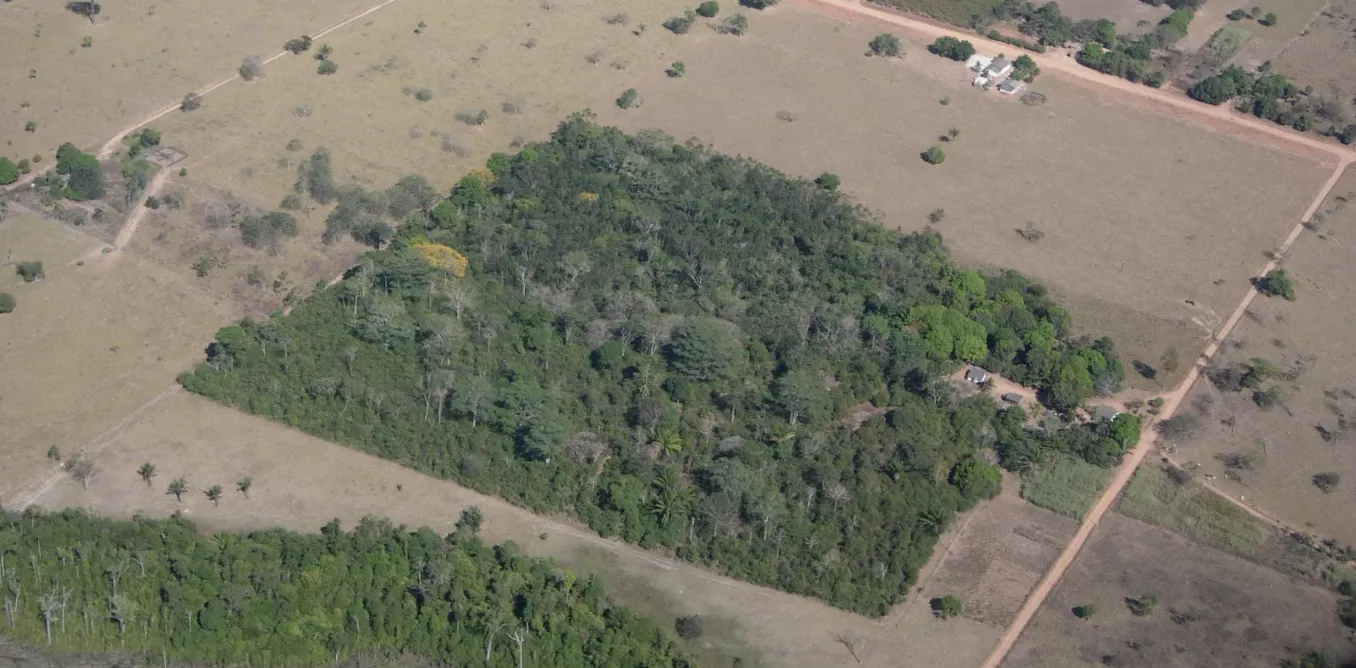
Researchers have found that small forest fragments can support more bird species when the surrounding landscape provides adequate habitat and resources. The study reveals that fragment size alone does not determine bird diversity.
The research challenges the long-held assumption that larger forests always harbor more species. Instead, the quality of the landscape matrix surrounding isolated forest patches plays an equally critical role in sustaining bird populations. When nearby areas contain shrublands, grasslands, or secondary forest, birds move between patches more freely. This connectivity allows species to access food sources and breeding grounds across fragmented terrain.
The study examined bird populations across multiple forest fragments of comparable size but situated in different landscape contexts. Fragments surrounded by degraded land supported fewer species. Fragments embedded in landscapes with diverse vegetation types hosted substantially higher bird diversity, even when the fragments themselves remained unchanged.
This finding offers practical implications for conservation in heavily modified regions. Protecting or restoring the landscape between forest patches may deliver greater conservation returns than focusing exclusively on expanding individual fragments. Strategies could include planting native vegetation in agricultural areas, maintaining hedgerows, and protecting riparian corridors.
The research suggests that landscape-level planning matters as much as site-level protection. In many regions, expanding forest size proves politically difficult or economically unfeasible. Creating a mosaic of connecting habitats across the broader landscape provides a more achievable path for bird conservation.
These results apply particularly to tropical and subtropical regions where habitat loss has created numerous isolated forest remnants surrounded by plantations and degraded land. By improving the matrix habitat, land managers can effectively increase carrying capacity for bird species without necessarily acquiring or restoring additional forest area.
The findings support an ecosystem approach that views conservation not as isolated protected islands but as networks embedded in working landscapes.