The UK Department for Transport has revealed that Heathrow's proposed third runway would generate far less economic benefit than previously claimed. New analysis shows the project could boost GDP by only 0.05 percent, a 90 percent reduction from the earlier estimate of 0.5 percent.
The findings contradict government justifications for accelerating the expansion. Ministers have promoted the third runway as essential for economic growth, but the Department for Transport documents quantify substantial offsetting costs. The trade-offs from the larger airport could reduce UK wealth by as much as 62.5 billion pounds.
This revised assessment reflects updated modeling that accounts for broader economic impacts beyond direct aviation revenues. Previous estimates focused narrowly on increased passenger throughput and airport operations. The new analysis incorporates environmental costs, congestion effects, and displacement of economic activity from other sectors.
Heathrow currently operates two runways at near-capacity, handling approximately 80 million passengers annually. A third runway would increase capacity but also amplify noise pollution, air quality degradation, and carbon emissions from aviation. The climate implications carry particular weight given the UK's legal obligations under the Climate Change Act to reach net-zero emissions by 2050.
Aviation accounts for roughly 4 percent of global carbon emissions. Adding runway capacity typically increases flight volumes, counteracting efficiency gains from newer aircraft. The Department for Transport's analysis suggests planners must now weigh modest GDP growth against environmental damage and broader economic costs.
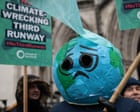
The revelation comes as Heathrow has secured planning approval for the expansion project, with construction potentially beginning in 2026. Opposition groups have challenged the expansion on climate and noise grounds. Local councils near the airport have cited air quality concerns and disruption during a multi-year construction phase.
The diminished economic case creates political pressure on the government. If the net economic benefit approaches zero while environmental costs remain substantial, the justification for proceeding becomes