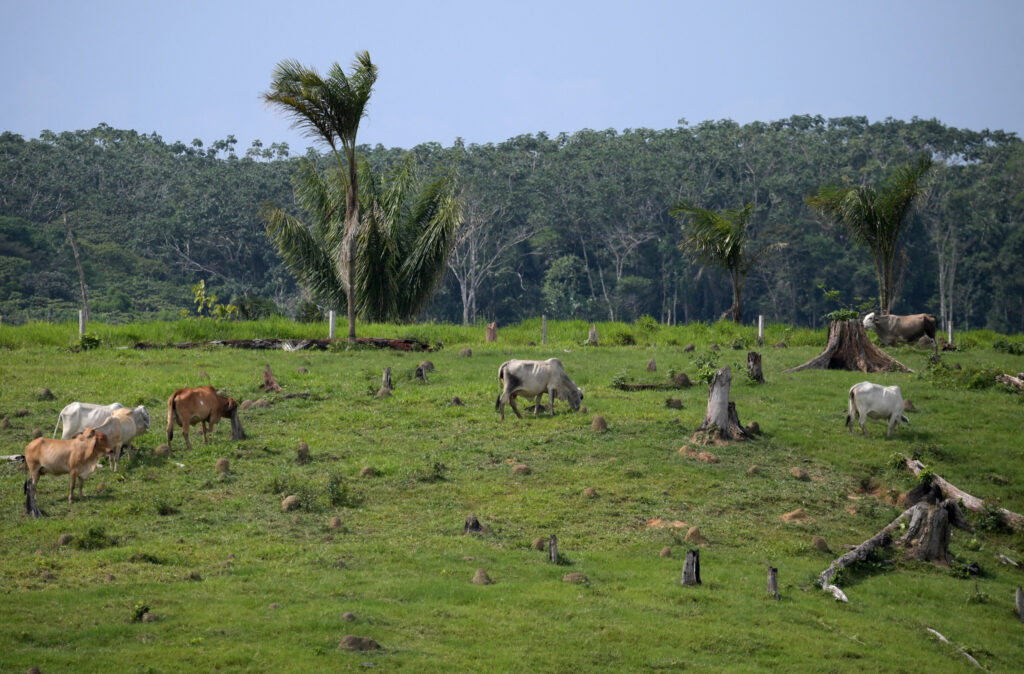
Colombia enacted a landmark traceability law requiring cattle to be tracked to their origins, targeting deforestation linked to livestock production in the Amazon. The law marks the first national legislation in the region designed to stop forest destruction connected to beef cattle ranching.
Cattle ranching drives deforestation across the Amazon basin. Livestock production ranks among the top causes of tree loss in the world's largest tropical rainforest, which stores roughly 150 billion tons of carbon. Deforestation in the Amazon accelerates climate change while destroying habitat for indigenous communities and wildlife.
Colombia's cattle traceability requirement creates supply chain accountability by forcing ranchers and meat companies to document where animals originate. The system prevents cattle raised on illegally deforested land from entering the market. Environmental groups view the legislation as a replicable model for other Amazon nations including Brazil, Peru, and Bolivia, where similar deforestation pressures persist.
The ranching industry has resisted such measures historically, citing compliance costs and operational complexity. However, pressure from international markets, particularly European buyers demanding sustainability certifications, has shifted political calculations. Several multinational beef companies operating in South America have adopted voluntary traceability standards ahead of government mandates.
Colombia's Amazon region contains roughly 35 percent of the entire rainforest. Between 2000 and 2020, the country lost approximately 3.3 million hectares of forest, with cattle ranching responsible for a substantial portion of that loss. Recent years have seen deforestation rates decline after peaks in 2020, partly due to intensified enforcement efforts.
The effectiveness of Colombia's law depends on implementation capacity. Monitoring agencies require adequate funding and staffing to verify compliance across thousands of ranches. Illegal cattle operations operating outside formal markets present enforcement challenges. Past Colombian environmental laws have faced execution gaps between legislative intent and on-the-ground results.
Environmental advocates frame the legislation