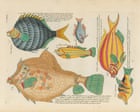
The Biodiversity Heritage Library, a free online archive containing 64 million pages of scientific texts, faces an uncertain future despite serving researchers and nature enthusiasts globally for two decades. The digital collection, assembled by over 680 museums, universities, libraries, and scientific institutions across six continents, provides unprecedented public access to centuries of natural history documentation.
The BHL holds rare materials including Victorian botanical field diaries, historical species illustrations, and scientific records that would otherwise remain confined to institutional vaults. Users access everything from taxonomic descriptions of extinct species like the Tasmanian tiger to specialized texts on traditional materials and historical ecological research. The library's scope spans China, Singapore, Australia, New Zealand, and Europe, making it genuinely international in both content and reach.
For conservation biologists, the archive offers baseline data on species populations and distributions before modern human impacts accelerated. For historians of science, it documents the evolution of natural history methodology. For policy makers, historical species accounts inform current biodiversity assessments and restoration targets.
The threat to the BHL's continuity reflects broader funding pressures on open-access scientific infrastructure. Institutions that digitize and host these materials face ongoing costs for servers, maintenance, and curation without guaranteed revenue streams. Many contributing organizations balance commitment to public knowledge with budget constraints that force difficult prioritization decisions.
The loss of such an archive would fragment access to irreplaceable primary sources across institutional silos, effectively privatizing knowledge that took decades to assemble. Researchers in lower-income countries particularly depend on free, centralized repositories since institutional subscriptions to commercial databases remain prohibitively expensive.
The stakes extend beyond academic convenience. Climate change and biodiversity loss require understanding historical baselines. Conservation targets, species recovery programs, and ecological impact assessments all rely on accurate historical documentation. A functioning BHL enables scientists and policymakers to access that baseline data without paywalls.
Preserv