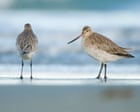
Arctic warming is disrupting the breeding cycle of millions of migratory waders that pass through Britain each spring. Birds traveling from sub-Saharan Africa to high Arctic breeding grounds face a critical mismatch between their arrival timing and food availability.
Warmer winters and springs across the Arctic are drying out wetlands weeks earlier than historical norms. This accelerated drying eliminates the insect abundance that fuels waders during their northbound migration. Species including ringed plovers, grey plovers, bar-tailed godwits, sanderling, and knot depend on predictable peaks of invertebrate biomass to build energy reserves for breeding season.
The British Trust for Ornithology documents these migration patterns through its regular monitoring blog. While this particular spring showed robust numbers of waders transiting British wetlands, the underlying trend reflects deeper ecological stress. Birds arriving at traditional stopover sites find depleted food resources. Those that complete migration to Arctic breeding grounds arrive undernourished, reducing breeding success and offspring survival.
This cascade of climate impacts extends beyond individual birds. Wader populations face compounding pressures. Arctic habitats warm faster than global averages, shrinking breeding areas and thawing permafrost that destabilizes nesting sites. Meanwhile, intensifying rainfall in some regions creates flooding that drowns nests and chicks.
The phenological mismatch between bird migration timing and Arctic seasonal cycles represents a fundamental climate adaptation challenge. Birds evolved their migration schedules based on environmental cues developed over millennia. Those cues now conflict with rapidly shifting Arctic conditions. Genetic adaptation occurs too slowly to keep pace with climate change at current rates.
Wader conservation requires urgent action across their entire range. Protecting wetlands in Africa and along migration corridors preserves critical refueling sites. Arctic habitat protection becomes essential as breeding grounds face industrial development pressure. International coordination through agreements