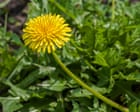
Global rubber supplies face mounting pressure from fungal disease and climate disruption, pushing researchers toward an unexpected solution: the Russian dandelion.
Scientists are reviving *Taraxacum koksaghyz*, a dandelion species native to Kazakhstan that Allied forces tapped during World War II when traditional rubber supplies collapsed. Soviet researchers discovered the plant's roots produce sufficient white latex for natural rubber production. After the war ended, manufacturers abandoned the crop and returned to *Hevea brasiliensis*, the conventional rubber tree.
Current conditions demand reconsideration. Natural rubber demand continues climbing while *Hevea brasiliensis* plantations face mounting threats. Fungal pathogens devastate traditional rubber trees. Climate change intensifies extreme weather across rubber-growing regions, limiting yields and reliability.
The Russian dandelion presents distinct advantages over conventional sources. The plant grows in temperate climates, reducing geographic concentration risk that plagues tropical rubber production. It demonstrates resilience to temperature fluctuations and disease pressures that compromise rubber trees. Expanding cultivation to regions outside traditional rubber belts diversifies supply chains and strengthens resilience.
Natural rubber remains essential for tire manufacturing, seals, and industrial applications where synthetic alternatives prove inadequate. Global demand reached approximately 13 million tons annually before pandemic disruptions, with consumption rising steadily as vehicle production expands in developing economies.
The shift back to dandelion cultivation represents pragmatic adaptation rather than novelty. Researchers must optimize breeding programs to maximize latex yields per plant. Commercial viability depends on scaling production efficiently and establishing collection infrastructure in temperate zones. Investment in agricultural research and cultivation systems will determine whether dandelion-derived rubber reaches markets competitively.
This transition addresses interconnected vulnerabilities in global supply chains exposed by climate instability and disease. Diversifying rubber sources reduces dependence on geographically concentrated plantations vulnerable to simultaneous