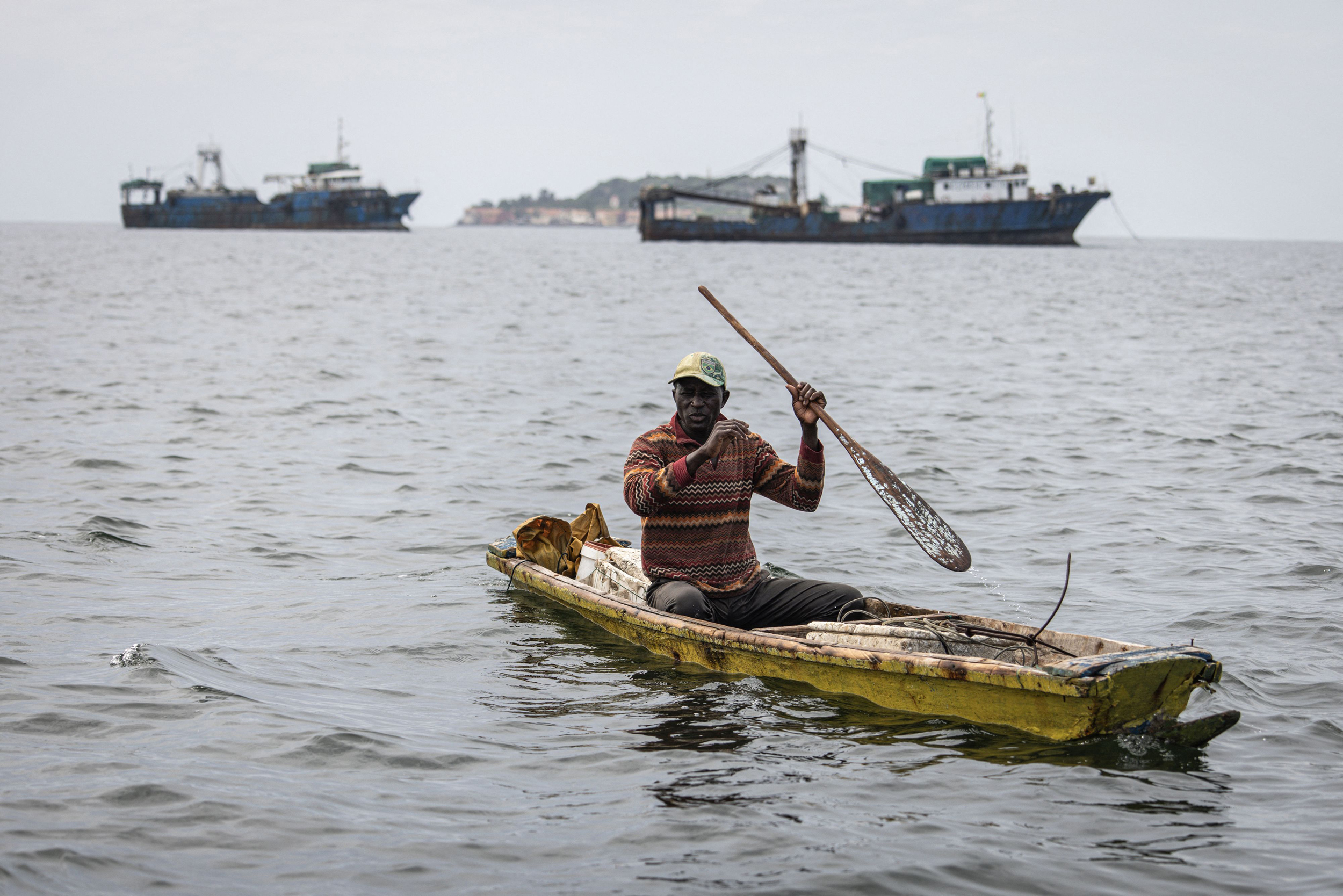
Illegal fishing vessels operating in West African waters exploit minimal oversight to plunder fish stocks that coastal communities depend on for survival. Mamadou Sarr, a fisheries official in Dakar, Senegal, documents how industrial overfishing has decimated nearshore populations of sardines and cuttlefish that once sustained generations of artisanal fishermen.
The problem cuts deep into food security and economic stability across the region. Senegal's fishing sector employs over 600,000 people directly and millions more through related industries. Yet foreign industrial fleets, often operating under flags of convenience and equipped with advanced technology, harvest fish in Senegalese waters with impunity while local fishermen watch their livelihoods vanish.
Transparency through satellite monitoring offers a concrete response. Vessel monitoring systems and automatic identification systems (AIS) transmit real-time location data from commercial ships. By analyzing these signals, authorities can identify vessels fishing illegally in protected zones or without proper licenses. Several West African nations have begun deploying this technology, creating databases that expose patterns of illegal activity.
The stakes extend beyond Senegal. Illegal, unreported, and unregulated fishing drains approximately 23 billion dollars annually from developing nations, according to World Bank estimates. In West Africa alone, illegal fishing removes an estimated 2 million tons of fish yearly, equivalent to the entire legal catch. This depletion cascades through ecosystems and devastates food security in countries where fish provides essential protein for vulnerable populations.
Technology alone proves insufficient without enforcement capacity and political will. Senegal and other West African nations lack sufficient patrol vessels and funding to monitor vast exclusive economic zones. International cooperation frameworks remain inconsistent. Yet shining light on illegal operations through satellite data creates accountability. When vessel movements become public, pressure builds on governments to act, on port authorities to deny landing rights, and on markets