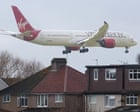
A third runway at London's Heathrow Airport would cause "major adverse" health impacts for up to 3 million nearby residents, according to an official Department for Transport analysis released as the government accelerated expansion plans.
The report examined effects beyond noise and air pollution. It found the project threatens access to housing, education, healthcare, open spaces, and transport infrastructure across the surrounding region. The analysis was commissioned during the government's fast-tracked approval process for the runway expansion.
Heathrow currently operates two runways and handles roughly 80 million passengers annually. A third runway would increase capacity substantially, drawing more flights and traffic to an area already densely populated. London's western suburbs, including towns like Hayes, West Drayton, and parts of Richmond, sit directly in flight paths and would experience intensified aircraft noise.
The health risks center on aviation noise exposure, which research links to cardiovascular disease, sleep disruption, and stress-related conditions. The World Health Organization established guidelines recommending noise exposure below 45 decibels during daytime hours. Communities near major airports frequently exceed these thresholds. Aircraft noise also correlates with reduced educational attainment in children and increased hospital admissions for heart conditions and strokes.
The Department for Transport's own assessment acknowledges these documented harms yet proceeds with expansion. The government has justified fast-tracking the project through a special approval framework, arguing aviation growth supports economic activity and employment. However, the analysis explicitly identifies trade-offs between airport expansion and public health outcomes in densely settled areas.
Environmental groups have challenged the expansion proposal, citing climate commitments and local health data. Heathrow's current operations generate significant carbon emissions from jet fuel. A third runway would increase aviation activity, conflicting with UK net-zero targets by 2050.
The report's acknowledgment of health harms to millions of residents establishes a documented baseline. Whether the