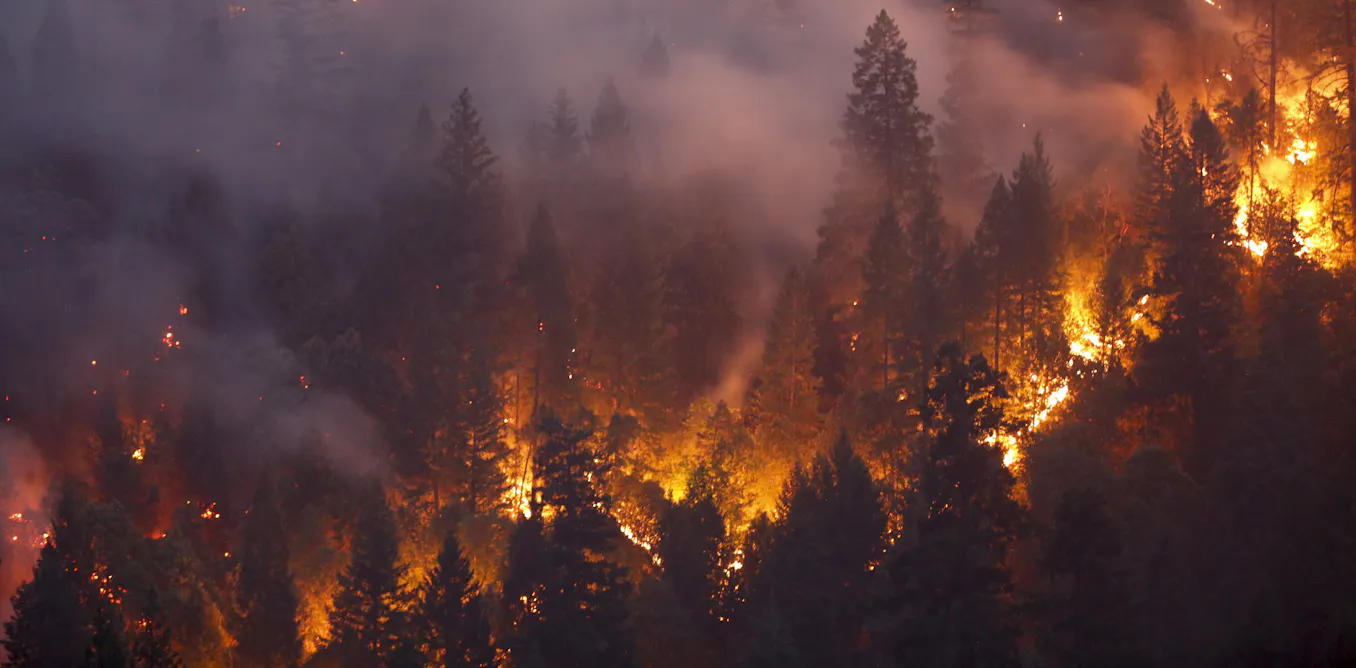
Heat waves amplify wildfire risk through two distinct mechanisms, according to emerging research. The first operates through direct vegetation drying. Extended periods of extreme heat lower the moisture content in trees, shrubs, and grasses, creating fuel that ignites more readily. The second pathway involves atmospheric changes that increase dry lightning strikes, the type most likely to spark fires.
Dry lightning occurs when rain evaporates before reaching the ground during thunderstorms. Heat waves intensify atmospheric instability and moisture patterns that favor this phenomenon. When combined with drought-stressed vegetation, dry lightning becomes a far more dangerous ignition source than lightning that falls during wet weather.
The interaction between heat and lightning represents a compounding threat. A single dry lightning strike during a heat wave ignites vegetation primed for rapid combustion. Without moisture in the fuel load, fire spreads faster and burns hotter than it would under cooler conditions.
Research quantifying this relationship provides concrete evidence of climate-driven fire intensification. As global temperatures rise, heat waves occur more frequently and last longer, creating extended windows of peak fire danger. The Western United States, Mediterranean regions, and Australia have already experienced this pattern shift, with fire seasons now arriving earlier and persisting later into the year.
This mechanism explains why some regions are seeing record-breaking fire seasons despite rainfall that appears adequate during cooler months. Heat waves suppress moisture recovery in vegetation, effectively negating benefits from seasonal precipitation.
Fire management agencies increasingly factor extreme heat into risk assessments. Recognizing that heat waves function as a multiplier rather than a simple drying agent allows for more accurate prediction of fire danger and resource allocation during critical periods.
The findings underscore that wildfire risk cannot be addressed through vegetation management alone. Addressing climate change directly remains essential to reducing the frequency and severity of conditions that enable catastrophic fires.