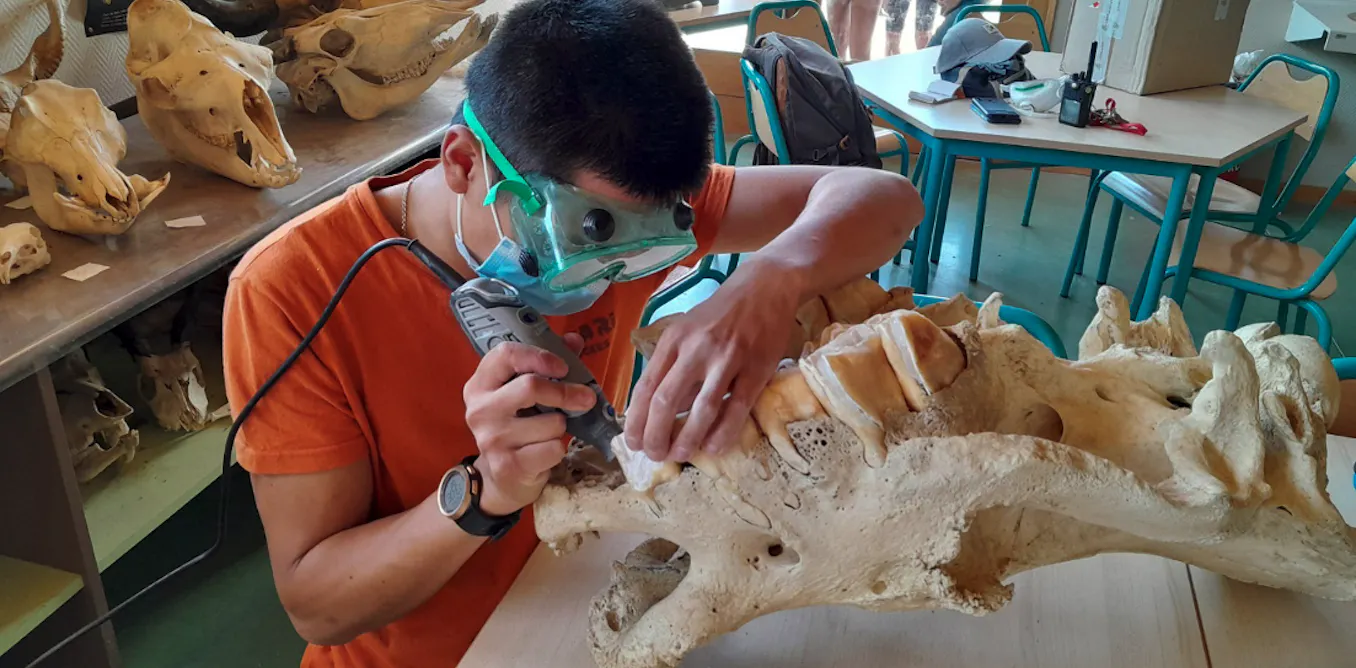
Researchers examining archaeological artifacts from Neanderthal sites have identified rhinoceros teeth bearing wear patterns consistent with tool use, suggesting these extinct hominins deliberately fashioned and employed teeth as implements.
The study analyzed dental specimens recovered from Neanderthal occupation layers, focusing on microscopic striations and edge damage indicative of deliberate modification and sustained use. Scientists documented tooth specimens showing distinct working edges and fracture patterns that differ fundamentally from natural taphonomic degradation or post-depositional damage.
Evidence centers on how Neanderthals shaped these teeth into functional implements, likely for processing hides, cutting soft materials, or piercing tasks. The wear patterns reveal consistent directional use, demonstrating intentional tool production rather than opportunistic application of found materials.
This research expands understanding of Neanderthal technological capability and resource exploitation. Previous scholarship established their use of stone tools and bone implements, but evidence of specialized tooth-tool production indicates more sophisticated material knowledge and adaptation to available resources in their environments.
The findings align with broader archaeological evidence showing Neanderthals possessed cognitive flexibility and problem-solving abilities comparable to early modern humans. They inhabited diverse geographic regions and successfully adapted to varying ecological conditions, suggesting capacity for innovation when standard tools proved insufficient.
Rhinoceros remains appear in multiple Neanderthal archaeological contexts across Europe, indicating these megafauna represented both food resources and material sources. Access to large animal carcasses provided abundant raw materials that Neanderthals apparently exploited comprehensively.
The research methodology involved detailed microscopy and comparative analysis with known tool-use wear patterns, establishing rigorous standards for identifying intentional modification. This technical approach strengthens interpretations beyond speculation.
These findings contribute to reassessing Neanderthal behavioral complexity and technological ingenuity. Rather than viewing them as simple or inferior to contemporaneous human populations, evidence increasingly demonstrates they