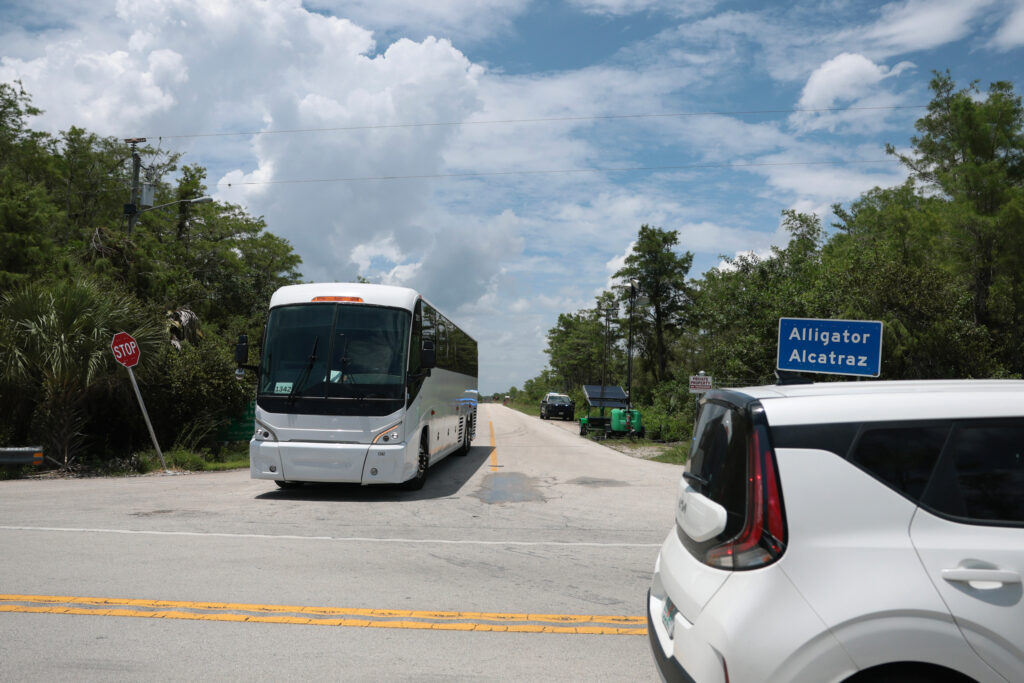
The Trump administration has relocated detainees from a soft-sided migrant detention facility in the Everglades ahead of hurricane season, Immigration and Customs Enforcement confirmed Wednesday. ICE stated that the agency and Florida moved detainees from the facility, known informally as "Alligator Alcatraz," in preparation for severe weather.
The facility's location in the Everglades posed operational risks during hurricane season, which runs from June through November. Soft-sided structures offer minimal protection against high winds and flooding, making them unsuitable for housing detainees during tropical storms and hurricanes that regularly threaten Florida.
The exact number of detainees moved and their destination remain unclear from ICE's statement. The agency did not specify whether detainees were transferred to other detention facilities within Florida or relocated to sites outside the state. ICE also did not disclose the timeline for the relocations.
The Everglades facility drew attention for its remote location and harsh conditions. Environmental advocates and immigration rights groups have criticized the use of temporary detention facilities in flood-prone areas, particularly given climate change intensifying extreme weather patterns in Florida. The state experiences frequent flooding and increasingly severe hurricanes as sea levels rise and ocean temperatures warm.
This relocation reflects broader challenges in managing migrant detention infrastructure. The Trump administration has expanded immigration enforcement and detention capacity, but housing large numbers of detainees in environmentally vulnerable locations raises both safety and logistical concerns. Federal agencies must balance enforcement operations with facility resilience during hurricane season.
The move comes as Florida prepares for an active Atlantic hurricane season. The National Hurricane Center and NOAA forecasted above-average storm activity for 2025, increasing the need for detention facilities to withstand severe weather. ICE's decision to move detainees demonstrates that even enforcement agencies recognize the operational impossibility of maintaining soft-sided detention centers in hurricane-prone regions during