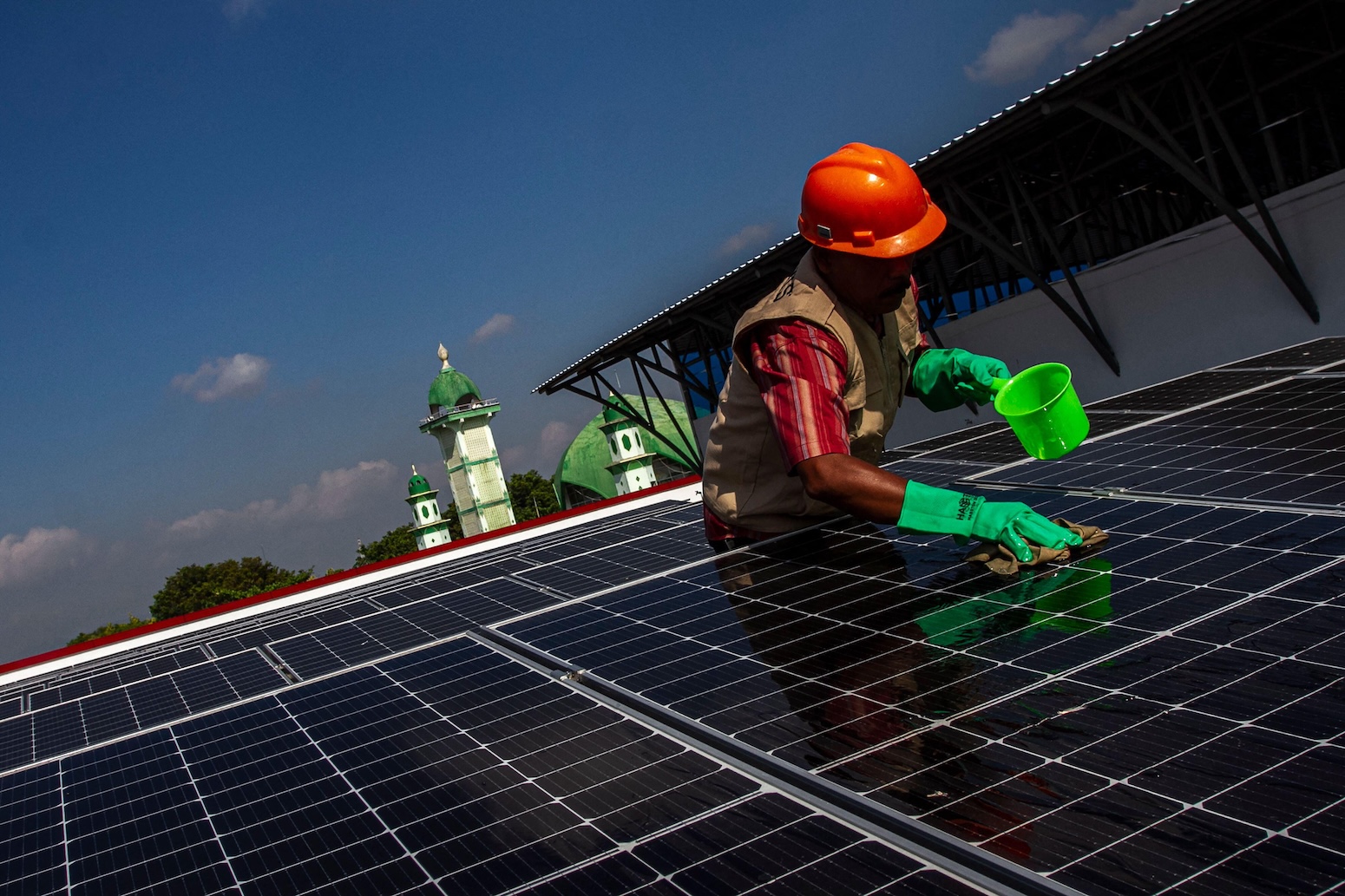
Solar energy has displaced natural gas as Asia's third-largest electricity source, marking a watershed moment for renewable adoption across the world's most populous continent.
The shift reflects accelerating capacity additions and falling solar costs that have made photovoltaic installations increasingly competitive with fossil fuel generation. Asia's solar capacity has expanded dramatically over the past decade, driven by massive deployments in China, India, and Southeast Asia. China alone added more solar capacity in 2023 than the entire United States generates annually from all sources.
This overtaking of gas reflects two converging trends. First, solar installation costs have plummeted roughly 90 percent since 2010, making new solar farms cheaper to build than new coal or gas plants in most Asian markets. Second, governments across the region have set aggressive renewable targets. China aims for 1,200 gigawatts of wind and solar capacity by 2030. India targets 500 gigawatts of non-fossil capacity by 2030.
Natural gas remains important for grid stability and industrial uses, but its role as a primary electricity source faces structural decline. Asia's electricity demand continues rising, but solar and wind now capture the majority of new capacity additions region-wide. Coal still dominates Asia's generation mix by absolute output, providing roughly half the continent's electricity, but its share shrinks annually.
The transition carries profound climate implications. Asia accounts for roughly 60 percent of global carbon dioxide emissions. Replacing gas with renewable generation avoids tens of millions of tons of CO2 annually. Yet the region still builds new coal plants, particularly in Southeast Asia, complicating decarbonization efforts.
Grid integration challenges remain. Solar's intermittency demands battery storage and flexible generation capacity, infrastructure that Asia is rapidly developing but not uniformly across all markets. Transmission networks require substantial upgrades to distribute solar power from generation centers to population hubs.
This milestone