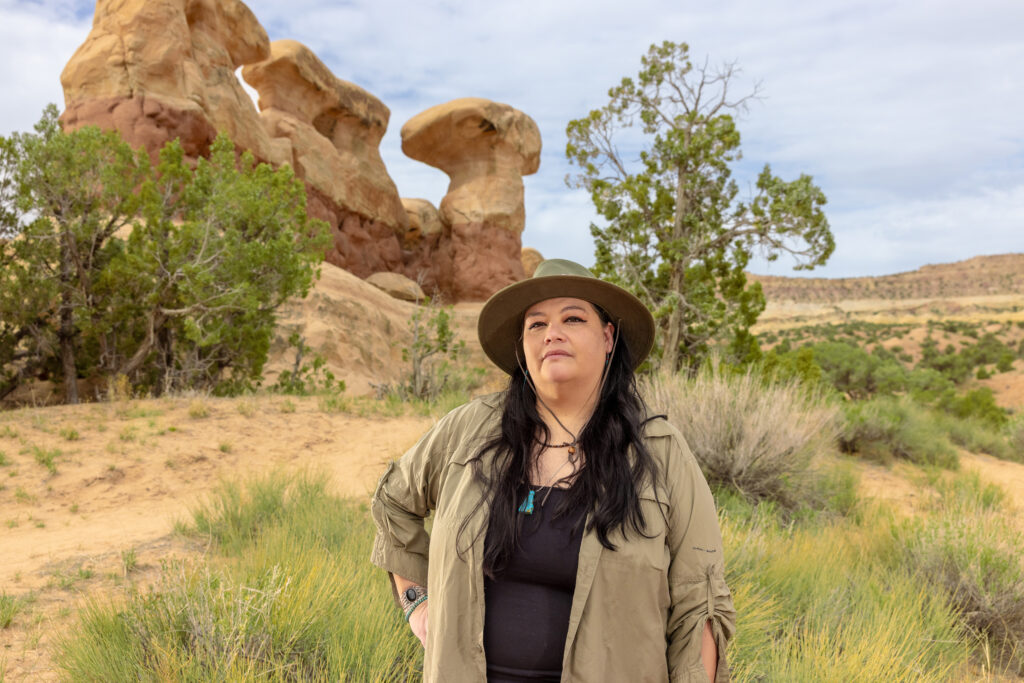
A federal court blocked an attempt to rescind the management plan for Grand Staircase-Escalante National Monument in southern Utah, preserving protections for one of the West's most ecologically significant landscapes.
The ruling rejected efforts to dismantle conservation rules governing the 1.9-million-acre monument, which straddles the Colorado Plateau and contains critical habitat for bighorn sheep, California condors, and other wildlife. The monument's management plan, finalized under the Biden administration, restricts resource extraction and off-road vehicle use across vast sections of the protected land.
Autumn Gillard, a member of the Southern Paiute Nation, testified about the monument's cultural significance for her people. The bighorn sheep depicted in ancient petroglyphs scattered across Grand Staircase-Escalante holds spiritual importance to Paiute communities. The monument sits within traditional Paiute territory, and its conservation protects sites central to Indigenous cultural heritage.
The court's decision shields the monument from legislative or executive action aimed at narrowing its boundaries or weakening enforcement of its management plan. Monument opponents, primarily in Utah's state government and local extractive industries, have sought to reverse conservation measures since President Bill Clinton designated the site in 1996. That designation removed over 1.7 million acres from potential coal mining and other resource development.
Environmental groups and tribal nations, including the Southern Paiute Indian Tribe, the Ute Indian Tribe, and the Navajo Nation, intervened in the case to defend the monument's protections. They argued that the management plan represents a balanced approach addressing both ecological preservation and legitimate local uses like grazing and hunting.
The bighorn sheep population within the monument serves as a barometer for ecosystem health across the Colorado Plateau. The species faces threats from disease, habitat loss, and human disturbance. By restricting