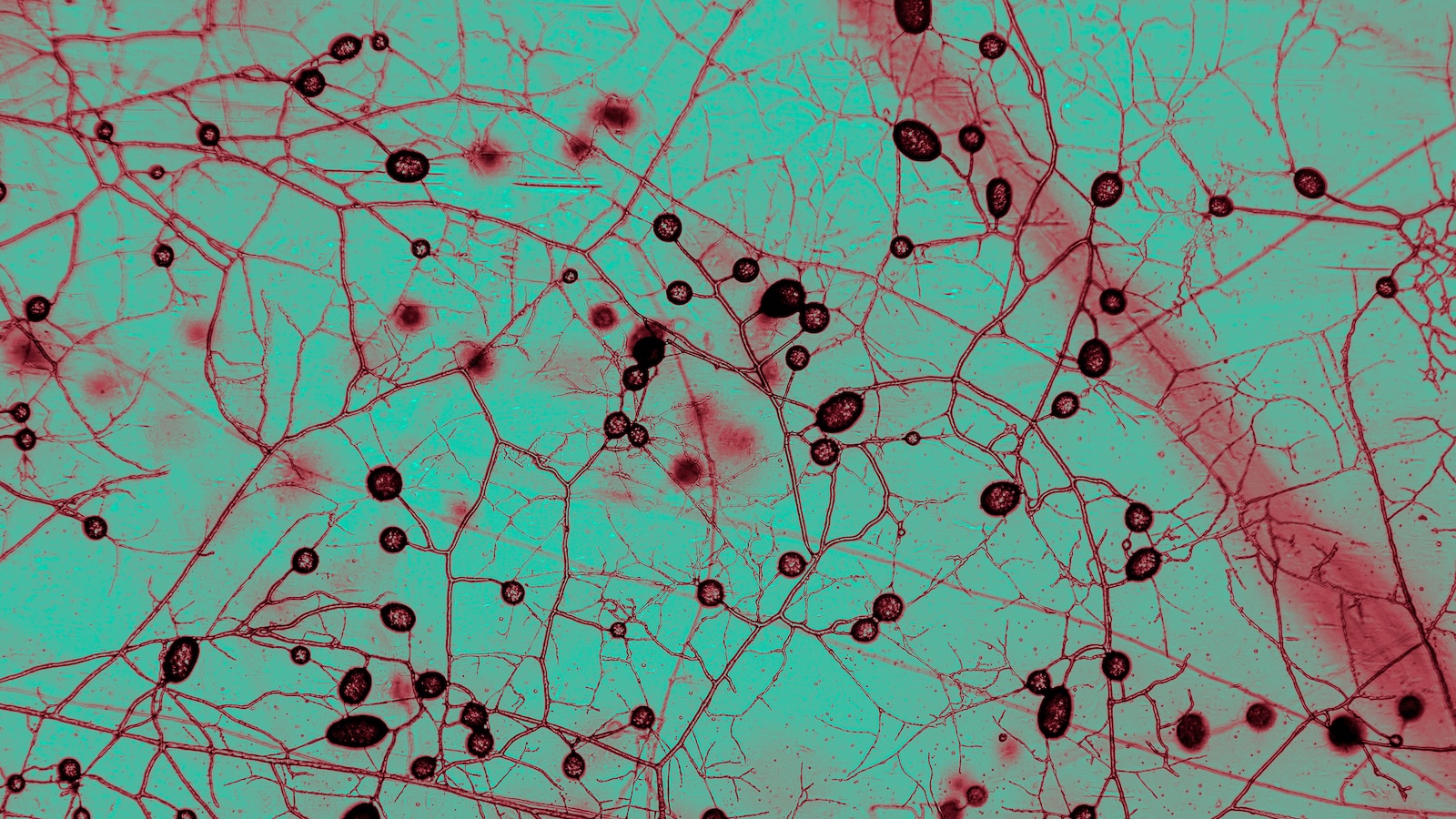
Arbuscular mycorrhizal fungi form one of Earth's largest biological networks, extending across an estimated 110 quadrillion kilometers of fungal filaments underground. These microscopic partners colonize roughly 80 percent of terrestrial plant roots, trading nutrients and water for carbon compounds that plants produce through photosynthesis.
New research reveals the scale of carbon cycling through this fungal infrastructure. The network transports billions of tons of carbon annually, making it a major player in global carbon dynamics. Scientists at various institutions have begun quantifying these flows, finding that mycorrhizal fungi store substantial amounts of carbon in soil while simultaneously releasing some back into the atmosphere as carbon dioxide.
The fungi's ecological role extends beyond carbon storage. They enhance plant nutrient uptake, improve soil structure, and increase plant resilience to drought and disease. Their presence correlates with healthier ecosystems and greater vegetation productivity across forests, grasslands, and agricultural systems.
However, the network faces mounting pressures. Industrial agriculture, soil disturbance, and fungicide applications disrupt mycorrhizal communities. Deforestation eliminates the host plants these fungi depend on. Climate change alters soil temperature and moisture, affecting fungal function.
The carbon dimension adds complexity to soil management strategies. While mycorrhizal networks sequester carbon in soil organic matter, they also release greenhouse gases. The balance between storage and emission depends on factors including soil temperature, moisture, plant productivity, and fungal community composition.
Researchers emphasize that protecting mycorrhizal networks requires protecting the plants and soil systems that sustain them. Conservation practices such as reduced tillage, diverse cropping systems, and forest preservation maintain fungal communities and their climate-regulating capacity. Understanding these underground networks shifts how scientists view soil not as inert substrate but as a living system integral to planetary temperature regulation and vegetation health.