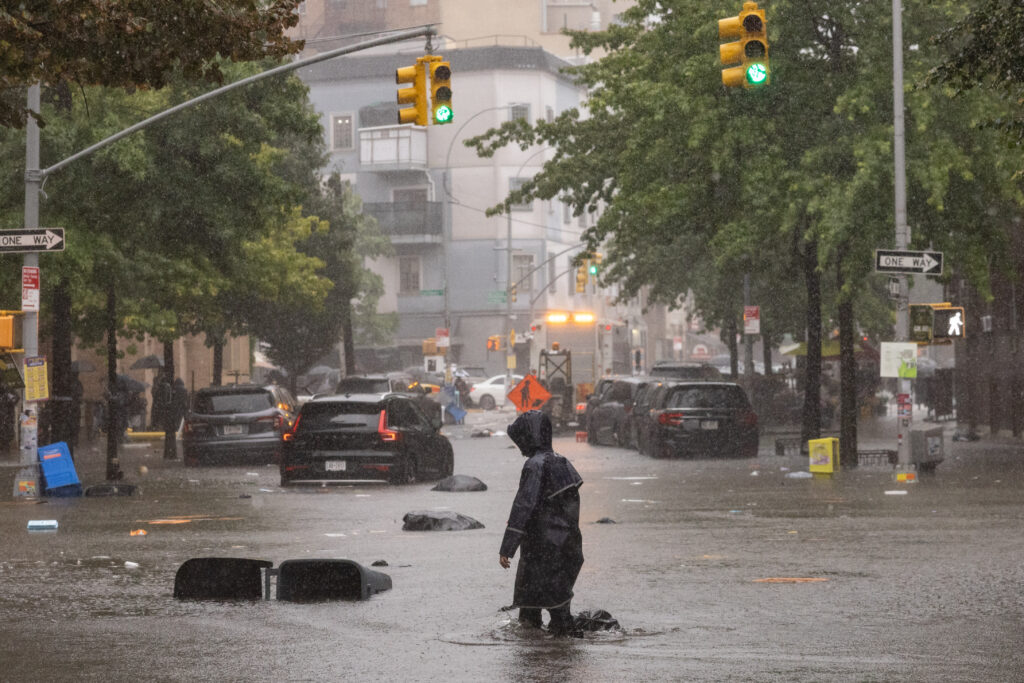
Copenhagen's devastating 2011 flood, which dumped more than 5 inches of rain in a single day and caused over $1 billion in damages, prompted city officials to redesign urban water management. The Danish capital spent the following decade installing permeable pavements, green roofs, retention ponds, and wetland corridors across neighborhoods. This approach, called "sponge city" infrastructure, absorbs and filters stormwater rather than channeling it into overwhelmed drainage systems.
The concept has spread globally. Cities from Rotterdam to Shanghai to Philadelphia have adopted similar strategies, treating urban landscapes as natural water management systems. Green infrastructure reduces flooding risk, recharges groundwater, cools neighborhoods during heat waves, and improves air quality.
Yet climate change poses a test sponge cities were not designed for. Atmospheric rivers and intensifying storms now deliver rainfall at rates that exceed the absorption capacity of even well-engineered green spaces. A 2023 analysis found that extreme precipitation events have increased 7 percent per decade across the Northern Hemisphere over the past 50 years. Models project that frequency will accelerate.
Copenhagen's sponge infrastructure has performed well during moderate storms but faces limits during the most severe events. During a 2021 storm, retention ponds filled rapidly, and parts of the city still flooded. Engineers acknowledge the systems function as one layer of protection, not a complete solution.
Researchers at the Technical University of Denmark and other institutions are now examining how to scale sponge city capacity. Options include expanding green infrastructure networks, deepening retention systems, and integrating nature-based solutions with traditional gray infrastructure like larger pipes and pumping stations.
Cities cannot engineer their way around climate physics. Sponge cities represent genuine progress in reducing flood risk and improving urban resilience. But their effectiveness depends on limiting warming itself. Without emissions reductions that keep warming below