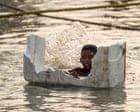
More than one billion children worldwide face simultaneous exposure to at least three climate hazards including heatwaves, storms, floods, and droughts, according to a Unicef report. This represents half of the global child population.
The hazards threaten children's physical health, educational access, and survival across all income brackets. Children in high-income countries face exposure to at least one climate hazard, though the concentration of multiple overlapping threats appears highest in vulnerable regions.
Heatwaves pose direct physiological risks to developing bodies less able to regulate temperature. Storms and flooding damage infrastructure, displacing families and interrupting schooling. Droughts compromise water and food security, driving malnutrition and disease. The compounding effect of three or more simultaneous hazards accelerates harm.
Unicef's findings underscore that climate impacts no longer concentrate exclusively in low-income nations. High-income countries now experience measurable climate stress on children, though adaptation capacity differs sharply. Wealthy nations possess resources for early warning systems, evacuation infrastructure, and climate-resilient public services. Low-income countries lack such buffers, amplifying vulnerability.
The timing matters. Children exposed during critical developmental windows face lasting cognitive and physical damage. Heat stress during pregnancy and infancy reduces brain development. School closures from floods and storms disrupt learning precisely when education access determines future opportunity. Malnutrition from drought-driven food scarcity stunts growth.
The exposure intensity correlates with greenhouse gas emissions patterns. Children in regions least responsible for cumulative emissions face the harshest hazards. Sub-Saharan Africa, South Asia, and Southeast Asia report the highest concentrations of multi-hazard exposure, despite these regions contributing minimally to atmospheric carbon accumulation.
Unicef's report quantifies climate change as a child protection crisis. With atmospheric CO2 now exceeding 420